Cashflow Archives - First Class Accounts Ovens and Murray and Busy01 Consulting

Category Archives for "Cashflow"

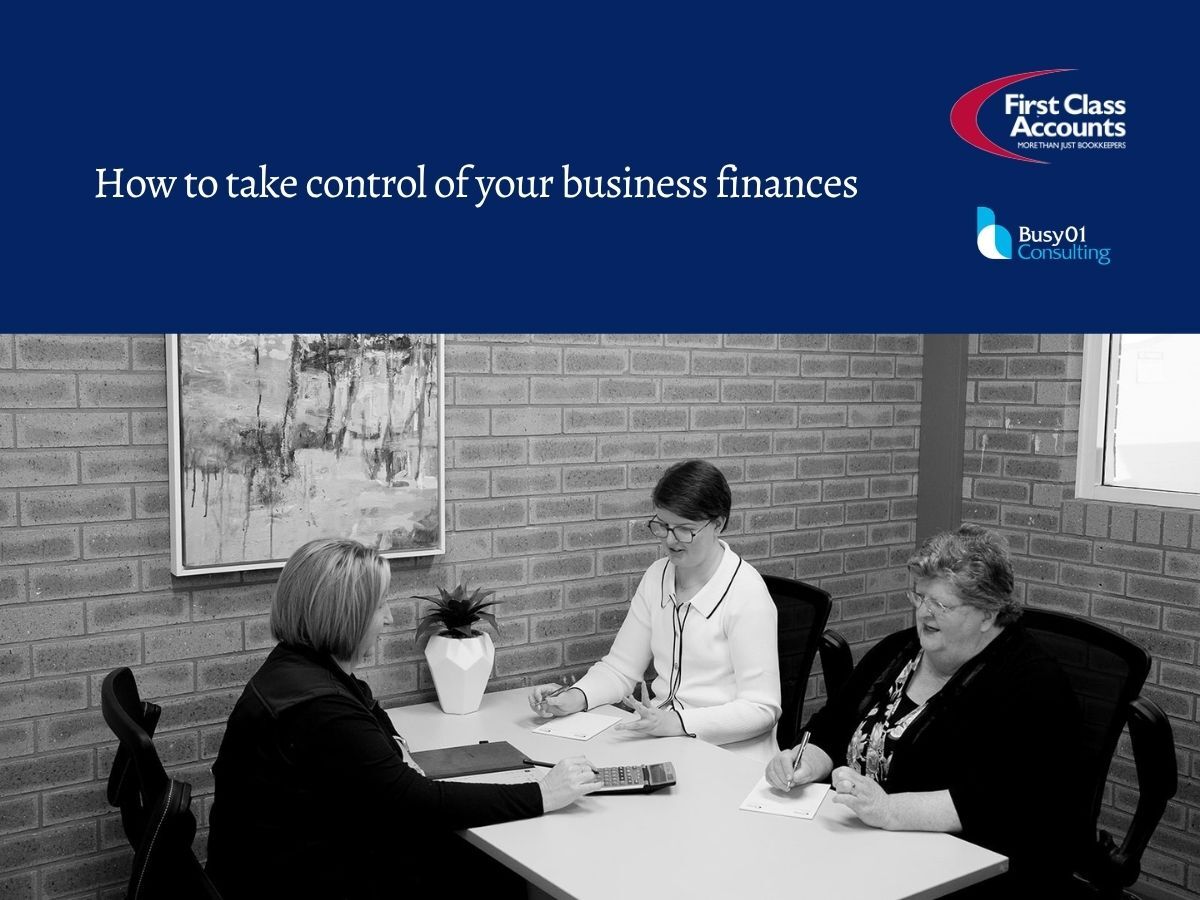
Three women meet around an office table to review business finances, with a calculator and paperwork, beneath First Class Accounts Ovens & Murray and Busy01 Consulting branding.

Regain control of your business

How to take control of your business finances

Growth is not the only measure of a successful business. You may want a business that provides a reliable income, supports your employees, gives you time with your family and allows you to contribute to your community. You may also want fewer financial surprises and more confidence that upcoming payments are covered.

Whatever you want your business to provide, having control depends on accurate information and practical planning. You need to understand where the business is now, where you want it to go and whether the money coming in will support the commitments you have made.

Three tools can help you do this:

  1. A practical business plan

  2. A cash flow forecast

  3. Regular financial reporting and accountability

These tools work together. Your business plan sets the direction, your forecast tests whether the numbers support that direction, and regular reporting shows whether the business is progressing as expected.

For these tools to be useful, they need to be built on accurate, current bookkeeping. When transactions are missing, accounts have not been reconciled or payroll liabilities are incomplete, the reports cannot give you a reliable picture of the business.

A practical business plan

Your business plan does not need to be a lengthy document that is written once and then forgotten. It needs to be practical, easy to review and relevant to the decisions you make throughout the year.

A concise plan can define what you want from the business, including the income it needs to provide, the time you want to spend working, the responsibilities you want to delegate and the outcomes you want to achieve.

It should also identify the financial and operational measures that will show whether you are progressing. These may include revenue, gross profit, operating expenses, outstanding invoices, available cash, payroll costs, job profitability or another measure that is relevant to the way your business operates.

The measures you choose should help you make decisions. Tracking a large number of figures can create more work without giving you useful information. It is usually better to choose a smaller group of measures that relate directly to your priorities and review them consistently.

Your annual goals can then be divided into quarterly actions. These might include improving the invoicing process, reducing overdue accounts, reviewing supplier costs, implementing a more suitable business app, improving payroll procedures or establishing a regular reporting schedule.

A plan also needs to reflect the resources available to the business. Before committing to a new employee, piece of equipment, service or project, consider the effect on cash flow, workload and existing obligations. Your current financial information can help you assess whether the business is ready to proceed.

First Class Accounts Ovens & Murray can help ensure the financial information used in your planning is accurate and up to date. We can also help you identify the reports and business data that are most useful for monitoring the plan.

Use a cash flow forecast throughout the year

A cash flow forecast estimates when money is expected to enter and leave your business. It can help you determine whether you are likely to have enough cash available to pay employees, suppliers, tax obligations, superannuation, loan repayments and other operating costs when they are due.

A forecast should be useful to you throughout the year, rather than prepared only when a bank or lender requests one. It can identify periods when cash may be tight, show when significant payments will occur and help you plan before a shortfall creates pressure.

Your forecast may include:

  1. Expected customer payments

  2. Regular operating expenses

  3. Wages and payroll related costs

  4. Superannuation payments

  5. GST, PAYG withholding and other ATO obligations

  6. Loan and finance repayments

  7. Planned purchases or investments

  8. Owner drawings or distributions

  9. Seasonal changes in income and expenses

From 1 July 2026, Payday Super changes the timing of superannuation payments for employers. Super guarantee payments move closer to the payroll cycle rather than being managed as a quarterly outgoing. This makes it important to include superannuation in short term cash flow planning and ensure payroll processes, software and payment arrangements are ready for the change.

The forecast should also allow for realistic payment behaviour. An invoice issued today does not necessarily become available cash today. Customer payment terms, overdue accounts, seasonal slowdowns and unexpected costs can all affect the timing of cash receipts and payments.

It is useful to prepare different scenarios where the outcome is uncertain. You might assess what happens if revenue is lower than expected, a major customer pays late, expenses increase or a planned purchase is brought forward. This allows you to identify options before you need to use them.

A forecast loses value when it is based on incomplete records or left unchanged for the rest of the year. It should be updated using actual results so that it continues to reflect current trading conditions.

First Class Accounts Ovens & Murray can help you maintain accurate records, track upcoming commitments and prepare useful cash flow information. We also provide forecasting support using business apps such as Futrli to give you clearer visibility over future performance. This gives you a stronger basis for scheduling payments and discussing future decisions with your accountant or other advisers. 

Review accurate reports regularly

The value of a business plan and cash flow forecast comes from using them. Regular reporting allows you to compare actual results with your expectations and determine whether your actions are producing the intended outcome.

Depending on the business, reporting may be completed monthly or more frequently. The reporting schedule should give you enough time to respond when something changes.

Useful reports may include:

  1. Profit and loss reports

  2. Balance sheets

  3. Cash flow reports and forecasts

  4. Accounts receivable reports

  5. Accounts payable reports

  6. Payroll and leave liability reports

  7. Budget compared with actual results

  8. Job, project, department or location performance

Reliable bookkeeping is the foundation of useful reporting. Bank accounts need to be reconciled, transactions need to be categorised correctly and payroll information needs to be complete. Reports produced from inaccurate or outdated records can lead to poor decisions.

Your reports should also help you ask specific questions. If sales have increased but cash has fallen, you may need to review payment timing, stock purchases, expenses or outstanding invoices. If payroll costs have increased, you may need to compare staffing levels, hours worked and revenue. If a service appears profitable, you may need job or project data to confirm whether all associated costs have been included.

The apps used across the business can affect the quality of this information. Accounting software, payroll systems, time tracking tools, job management platforms, inventory systems and point of sale software need to exchange information correctly. Poor setup can create duplicated work, missing data and reporting errors.

First Class Accounts Ovens & Murray can review how your bookkeeping and operational apps work together. We can recommend suitable apps, assist with setup and integration, and provide training so your team understands the required process. The aim is to reduce unnecessary handling and give you more reliable information.

Regular review meetings help ensure that important tasks are completed, financial issues are addressed early and decisions are based on current information. 

Turn your plan into useful financial information

A business plan, cash flow forecast and regular reporting process each serve a different purpose. Together, they help you understand what you want from your business, whether its finances can support that outcome and what needs attention along the way.

They are most useful when the underlying bookkeeping is accurate and completed on time. Regular reconciliations, reliable payroll processing, organised payment information and properly connected apps make it easier to understand what is happening in the business.

First Class Accounts Ovens & Murray provides fully contracted bookkeeping, payroll and business app advisory services. This means the work continues when someone is away, without leaving gaps in your bookkeeping or reporting schedule.

We can help you:

  1. Keep your bookkeeping accurate and current

  2. Maintain payroll and superannuation records

  3. Improve the information used for cash flow planning

  4. Prepare regular financial reports

  5. Review the apps and processes supporting your financial data

  6. Work with your accountant and other advisers when needed

If your reports arrive too late to guide decisions, your forecast is out of date or your financial processes are taking too much time, contact First Class Accounts Ovens & Murray to discuss the support your business needs.


Frequently asked questions about taking control of your business finances

How can I take control of my business finances?

Start with accurate bookkeeping, a practical business plan and a cash flow forecast. Review your actual financial results regularly against your forecast and investigate significant differences before they become larger problems.

What is a business cash flow forecast?

A business cash flow forecast estimates the timing of money coming into and leaving your business. It can help you plan for wages, suppliers, tax, superannuation, loan repayments and other expenses.

How often should a cash flow forecast be updated?

A cash flow forecast should be reviewed regularly and updated when actual income, expenses or payment timing differs from the original assumptions. Monthly reviews may suit some businesses, while businesses with tighter cash flow may need to update the forecast weekly.

What financial reports should a business review?

The reports will depend on the business, but common reports include the profit and loss statement, balance sheet, cash flow report, accounts receivable, accounts payable, payroll liabilities and budget compared with actual results.

Can a bookkeeper help with cash flow management?

A bookkeeper can help keep your financial records current, provide accurate reports, track payment commitments and prepare information for cash flow planning. A registered BAS agent can also assist with relevant BAS services and obligations within the scope of their registration.

How can business apps improve financial reporting?

Appropriate business apps can reduce duplicate data entry and improve the flow of information between invoicing, payroll, job management, inventory, time tracking and accounting systems. The apps need to suit the business and be configured correctly to produce reliable information.

How will Payday Super affect business cash flow?

From 1 July 2026, employers need to manage superannuation payments closer to the timing of employee wages. This means super needs to be included in each payroll cycle’s cash flow planning rather than treated mainly as a quarterly outgoing.

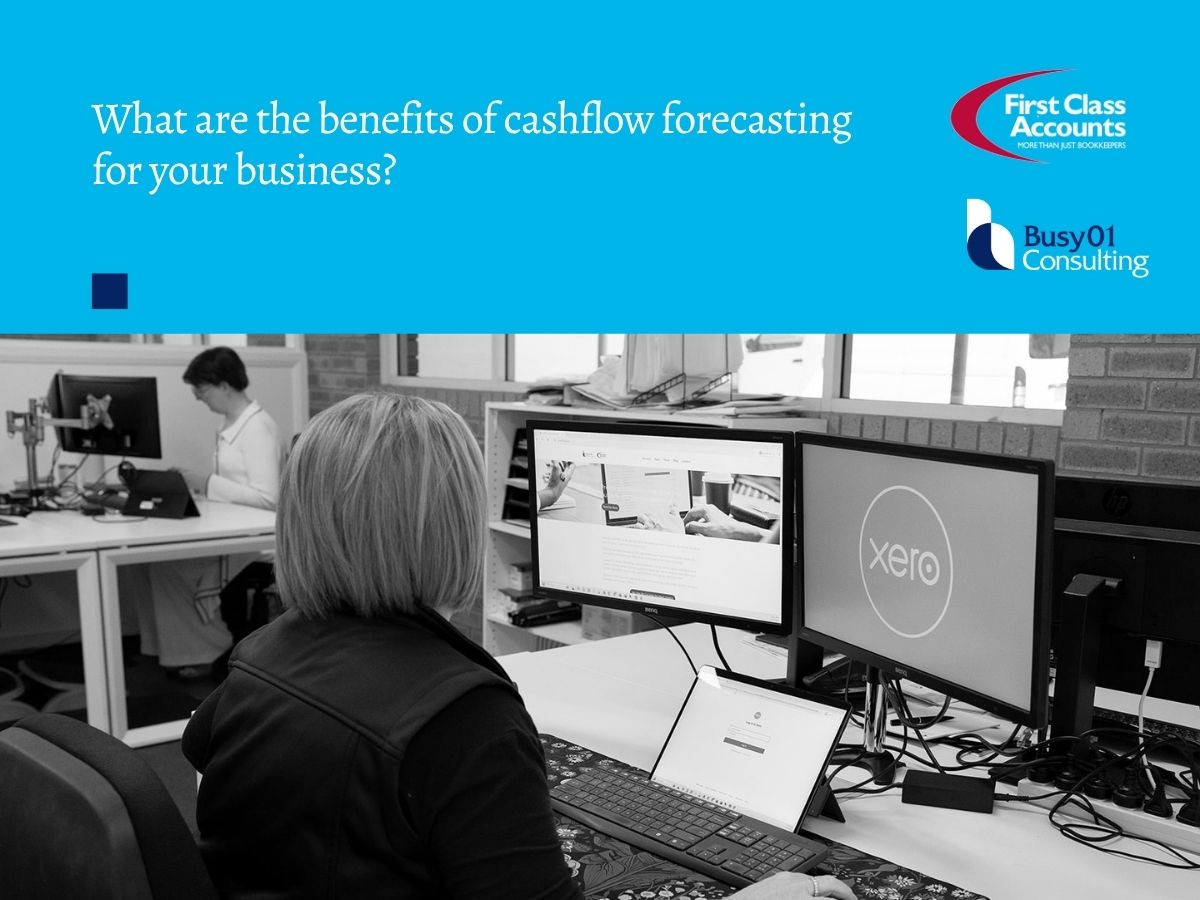
Person working at a desk with dual monitors displaying Xero accounting software, with First Class Accounts and Busy01 Consulting branding and text about cash flow forecasting benefits.

What are the benefits of forecasting?


What are the benefits of cashflow forecasting for your business?

There are many benefits to forecasting for your business, particularly when it comes to understanding your cash position and planning ahead.

First and foremost, you are more likely to protect and improve your profit position when you can project your income and expenses with a reasonable level of accuracy. This is not just about numbers on a report. It is about knowing what is coming up and being prepared for it.

Accurate cashflow forecasting also helps you identify opportunities and manage your day to day cash position. When you have this information available and up to date, you are in a much better position to make decisions at the right time, rather than reacting after the fact.

At First Class Accounts Ovens & Murray, this is a key part of how we support business owners. Reliable data and structured forecasting give you a clear view of what is happening in your business and what is coming next.

How cashflow forecasting supports better decisions

Here are some examples of questions that an accurate cashflow forecast can help you answer:

Can I start creating a new product or service, and when is the right time to do it? Can I open a new office or expand into a different area without putting pressure on cashflow? Can I afford to bring on another team member or outsource part of the business? Can I take additional drawings from the business without affecting upcoming obligations? Am I at risk of running out of cash, and if so, when?

These are the types of decisions business owners are making every day. Without a clear forecast, these decisions are often based on what is currently in the bank rather than what is coming up over the next few weeks or months.

This is where forecasting links directly to cashflow confidence. Knowing what is ahead allows you to plan payments, meet obligations such as GST, PAYG and super, and avoid last-minute pressure.

How to create a cashflow forecast

How do you create a cashflow forecast?

It no longer needs to be done manually in spreadsheets.

Forecasting apps such as Futrli, which integrates with Xero, allow you to build and maintain forecasts using your actual financial data. This reduces manual work and improves accuracy.

One of the key benefits is the ability to test decisions before you commit to them. You can model different scenarios and see how they impact your cash position before making a change in your business.

What forecasting tools like Futrli actually do

Futrli includes features that support this process:

It creates separate predictions for invoices, cash transactions and journal entries. It tracks how long it takes for invoices to be paid based on your actual customer behaviour. It adjusts forecasts as new data comes in during the month. It identifies patterns across different accounts. It includes payroll predictions aligned with your payroll setup. It presents information in a structured format that is easy to review.

These tools are only effective when the underlying data is accurate. Reliable bookkeeping and correctly processed payroll ensure your forecasts reflect what is actually happening in your business.

This is where First Class Accounts Ovens & Murray adds value. Forecasting is not treated as a standalone task. It is connected to your bookkeeping, payroll, and reporting, so everything is aligned and working together.

How far ahead should you forecast?

Forecasts are most useful when looking ahead over the next 6 to 12 months. This gives you enough visibility to plan for upcoming expenses and business decisions.

In the short term, forecasting helps manage immediate obligations such as payroll, supplier payments and ATO commitments.

Over a longer period, it allows you to assess trends and understand how your business is tracking.

The further you look ahead, the more variables come into play. This is why forecasts should be reviewed and updated regularly, not set once and left unchanged.

What this means for your business

If you are relying on your bank balance to guide decisions, you are only seeing part of the picture.

First Class Accounts Ovens & Murray can set up and manage cashflow forecasting for your business using tools like Futrli, supported by accurate bookkeeping and ongoing review.

If you want forecasting set up properly and working with your numbers, First Class Accounts Ovens & Murray can take care of it for you, so you always know where your business stands.


FAQs about cashflow forecasting

What is cashflow forecasting and why does it matter for Australian businesses?

Cashflow forecasting estimates the money coming into and going out of your business over a set period. For Australian businesses, it is critical for managing obligations like BAS, PAYG withholding, and superannuation, helping you avoid shortfalls and plan ahead with more certainty.

How does cash flow forecasting help manage ATO payments?

A cashflow forecast shows when key payments such as GST, PAYG, and super are due, alongside your expected income. This allows you to plan ahead, set funds aside, and avoid last minute pressure or missed deadlines.

Do I need software like Futrli for cashflow forecasting?

You can create forecasts manually, but tools like Futrli, connected to Xero, use real time data to improve accuracy and save time. They also allow you to test different scenarios, helping you make better decisions based on how your business actually operates.

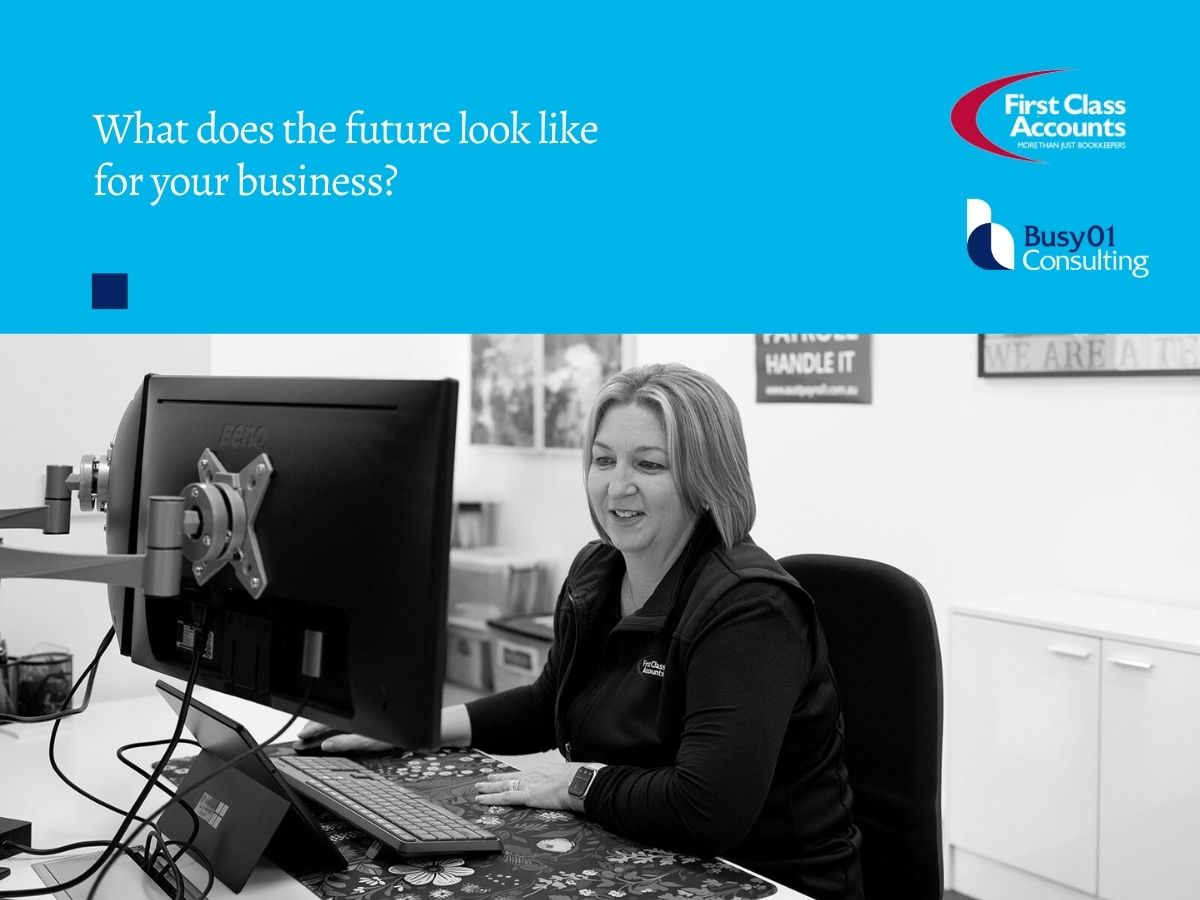
First Class Accounts Ovens & Murray team member working at computer reviewing business data to support clients with planning ahead in business

Coming out stronger

Planning ahead in business

What does the future look like for your business?

Running a business in 2026 comes with a different level of pressure. Global events are directly affecting day to day operations, not just long term planning. Fuel prices have increased sharply, which is flowing through to transport, supplier costs and pricing across most industries.

At the same time, interest rates remain elevated, increasing borrowing costs and tightening cash flow for many businesses.

These external pressures are creating a more unpredictable operating environment. Costs shift, compliance requirements change, and cash flow can tighten quickly if it is not actively managed.

If you are a business owner, the more visibility you have over your numbers, systems and obligations, the more control you have over your decisions.

Planning is not about predicting the future perfectly. It is about being prepared for different scenarios and knowing what actions to take when things change.

Practical steps to strengthen your business position

Start with a clear cash flow forecast

A current and accurate cash flow forecast gives you visibility over what is coming in, what is going out, and when. This is one of the most practical ways to stay in control, especially when costs are changing quickly.

If you are unsure how to structure this, First Class Accounts Ovens & Murray can set up and maintain a cash flow forecast so you are not working it out on the fly each month.

Plan for key obligations in advance

Know when your BAS, PAYG withholding and super payments are due. Planning for these early avoids last minute pressure and protects your cash position.

We manage lodgements, track due dates and help you plan for upcoming payments so there are no surprises.

Understand your breakeven point

Knowing your breakeven point helps you make informed decisions about pricing, staffing and expenses. It also gives you a clear baseline when reviewing performance.

Schedule regular reviews of your numbers

Monthly reviews of your financial data help you identify trends early. This includes looking at revenue, expenses, margins and cash position.

This is where the numbers start to make sense. We can provide regular reporting and talk through what it actually means, so you can act on it.

Set aside funds for tax obligations

Review your current profit position and plan ahead for tax. Waiting until year end can create avoidable pressure on your cash flow.

Work with your bookkeeper consistently

A single meeting will not give you long term clarity. Regular conversations allow you to ask questions, understand your numbers, and adjust your approach as needed.

Our contract service model means the work is done consistently, and you have ongoing support when you need it.

Document your business direction

Be clear on your plans. Whether you are aiming for growth, maintaining your current position, or preparing for exit, your systems and decisions should support that direction.

Review your systems and processes

Inefficient processes cost time and money. Look at how work is being completed and where improvements can be made.

We review your current setup and identify where things can be streamlined, so you are not spending time fixing avoidable issues.

Use the right apps to reduce manual work

Many businesses are still spending time on manual data entry and disconnected systems. The right apps can reduce errors, improve accuracy and give you better information in real time.

At First Class Accounts Ovens & Murray, we support business owners in selecting and implementing apps that match how their business operates. This includes setup, integration and ongoing support so the systems actually work day to day.

Turning planning into action

If you are unsure where to start, or you want clarity around your numbers, systems or obligations, it is worth having a conversation.

First Class Accounts Ovens & Murray provides reliable bookkeeping, payroll and app advisory support, so you have accurate information and processes that work.

Contact us to discuss how we can support your business with clear reporting, better systems and consistent follow through.

FAQs about planning ahead in business

What is cash flow planning in a small business? 

Cash flow planning is tracking when money comes in and goes out so you can meet obligations like wages, BAS and supplier payments on time.

Why is regular bookkeeping important for business planning? 

Regular bookkeeping ensures your data is accurate and up to date, allowing you to make decisions based on current financial information rather than estimates.

How can business apps improve bookkeeping processes? 

Business apps automate data entry, connect systems and provide real time reporting, which reduces errors and improves efficiency across your operations.

First Class Accounts Ovens & Murray banner with heading Understanding working capital to maintain business success above an image of hands writing in a notebook beside a calculator

Understanding working capital to maintain business success

Understanding working capital to maintain business success

If cashflow keeps your business moving, working capital is the regular check you should undertake to ensure stability. It is important to understand your working capital position to maintain business success. Regularly checking working capital plays an essential part in protecting your business, particularly in periods of economic uncertainty, rising operating costs and shifting payment cycles.

What is working capital?

Working capital is your current assets minus your current liabilities. It measures the surplus or deficit you have available to meet short term commitments without needing to sell assets, borrow additional funds, or inject your own money into the business. The more working capital you have, the easier it is to fund growth, manage seasonal fluctuations and respond to unexpected expenses.

To calculate your working capital:

Cash + debtors + stock + work in progress minus creditors minus GST and PAYG owing minus superannuation payable

For example, if your business had the following balances:

Cash 150,000 Debtors 120,000 Stock 100,000 Creditors 45,000 Taxes owing 25,000

Then your working capital would be 300,000.

If the business had an overdraft of 150,000 rather than a positive cash balance, the working capital would fall significantly. This means the business would have little or no buffer to cover any slowdown in debtor payments or a downturn in sales. In more serious cases, the business could face risks associated with trading while insolvent.

Working capital pressure today is more commonly caused by rising supplier costs, wage increases, extended debtor terms and higher compliance obligations. Now is the time to review your processes, reporting and payment systems to strengthen your working capital position.

Consider the following strategies:

Build up enough cash to cover at least 2 months’ sales value

Use the average sales value for the last six months as a starting point, but also review your fixed monthly commitments including wages, superannuation, rent, loan repayments and subscriptions. Accurate monthly reporting ensures this calculation reflects your real cost base. First Class Accounts Ovens & Murray can help you determine the correct buffer amount based on reliable data.

Renegotiate your debt

If your business has an overdraft, consider whether the core debt should be structured as a term loan. Structured debt aligned to long term assets can reduce short term working capital pressure. Clear, up to date financial reporting strengthens conversations with lenders.

Negotiate with suppliers

Speak to your suppliers about payment terms that align with your cash inflows. Extended terms or structured payment arrangements may improve your working capital position. Consistent bookkeeping ensures these arrangements are tracked accurately.

Set aside money for taxes

Calculate the percentage of sales required to cover GST, PAYG and superannuation and transfer this regularly into a separate account. Automated systems can support this process when configured correctly. This protects your working capital and ensures compliance obligations are met on time.

Inject sufficient funds

If these strategies do not sufficiently improve your working capital, you may need to inject additional funds or secure structured finance. Decisions should be supported by cash flow forecasting and accurate reporting.

Working capital management

Undertaking regular working capital management is an effective way to strengthen your cash flow management. It should form part of your monthly review process rather than an occasional calculation.

First Class Accounts Ovens & Murray can help you calculate your working capital requirements, implement reliable systems and improve your reporting so you can make informed decisions with confidence.

Talk to us about strengthening your working capital management.


What is working capital?

Working capital is the difference between current assets and current liabilities. It shows whether a business can meet short term obligations.

How do you calculate working capital?

Working capital is calculated by subtracting current liabilities from current assets such as cash, debtors and stock.

Why is working capital management important?

Working capital management ensures wages, suppliers and tax obligations can be paid on time without creating cash flow pressure.

How often should working capital be reviewed?

Working capital should be reviewed monthly alongside regular financial reporting.

What causes working capital problems?

Delayed debtor payments, rising costs, high stock levels and poor reporting can all reduce working capital.

First Class Accounts Ovens & Murray team meeting with business owner to discuss cash flow management and funding options

Managing cashflow and accessing funding

Managing cashflow

and accessing funding when you need it


Working capital is one of the most important parts of running a stable business. It is the liquid cash available to cover wages, supplier payments, tax obligations and everyday operating costs.

When working capital tightens, pressure builds quickly. Payroll dates do not move. BAS lodgements still fall due. Suppliers still expect payment.

The solution is rarely panic borrowing. It is structured cash flow management, accurate reporting, and knowing what funding options are available before the pressure becomes urgent.

At First Class Accounts Ovens & Murray, this is where we step in. We help business owners understand their cash position clearly, plan ahead, and access funding in a practical and informed way.

Helping you understand your cash requirements

The starting point of any funding decision is understanding exactly what your current cash requirements are. That means sitting down and reviewing your full financial position in detail.

We look at your current bank balances, outstanding invoices, upcoming supplier payments, payroll commitments, superannuation liabilities, and GST or PAYG obligations. We also review your short term forecasts so you can see what is due over the next one to three months.

With accurate, up to date bookkeeping and reconciled accounts, you can clearly see whether there is a genuine funding gap or simply a timing issue between money coming in and money going out.

Armed with this information, you can make a considered decision about how much funding is actually required, if any. Borrowing without this clarity often leads to taking on more debt than necessary.

Understanding your true cash requirements puts you back in control and reduces uncertainty.

Liaising with banks and lenders

We can support you in conversations with banks, lenders and alternative funding providers by ensuring your financial information is accurate and up to date.

You may need to discuss extending an overdraft facility, increasing a line of credit, restructuring repayments, or exploring short term working capital finance.

Having clear and current financial reports gives you a stronger position when having these discussions. Lenders in 2026 expect reliable bookkeeping and realistic cashflow forecasts. If your numbers are current and reconciled, the conversation becomes far more straightforward.

Preparing financial information for lenders

Any lender will require detailed and accurate financial reporting to support a funding application.

We prepare up to date accounts, cashflow statements and forward projections so banks and finance providers can clearly assess your financial position.

This includes reconciled balance sheets, profit and loss reports, aged debtor listings and evidence of compliance with BAS, payroll and superannuation obligations.

Accurate reporting not only supports approval, it can also influence the terms offered.

Accessing government assistance

There are government grants, industry incentives and state based support programs available to businesses in 2026.

Depending on your industry, size and location, you may be eligible for small business grants, wage subsidies, training incentives, energy efficiency programs or regional development support.

We can help you identify what may apply to your business and ensure your financial records are accurate and up to date before submitting any application.

Clear reporting and compliant bookkeeping improve your chances of approval and reduce delays in the process.

Improving your debtor tracking

Outstanding customer invoices are often one of the main causes of cashflow pressure.

We can help you review your aged receivables report and identify which invoices require immediate attention.

From there, you can prioritise follow ups, clarify payment terms and, where necessary, negotiate realistic repayment arrangements.

Clear and consistent debtor management reduces reliance on external funding and improves working capital over time.

Extending credit from suppliers

Open and honest communication with suppliers remains important when managing short term cashflow pressure.

Where appropriate, you may be able to negotiate extended payment terms, part payments or structured repayment arrangements.

Having clear cashflow forecasts allows you to approach these conversations with confidence and provide realistic timeframes, rather than uncertain promises.

Maintaining control and stability

Cashflow pressure can happen at any stage of business growth. The key is identifying issues early and responding with clear information and practical action.

If you would like to strengthen your cashflow management, understand your working capital position or explore appropriate funding options, First Class Accounts Ovens & Murray can provide practical support.

We help you review your numbers, prepare accurate reports and make informed decisions so your business remains stable and well managed.

Talk to First Class Accounts Ovens & Murray about getting on top of your cashflow.


FAQs about working capital and managing cashflow

What is cash flow management?

Cash flow management is tracking, forecasting and controlling the money coming into and leaving your business to ensure you can meet short-term obligations.

How do I improve cash flow in my business?

Improve invoicing speed, follow up overdue accounts, review payment terms, forecast upcoming expenses and maintain accurate bookkeeping.

When should a business apply for funding?

Funding should be considered when cash flow forecasts show a shortfall that cannot be managed through improved collections or expense adjustments.

What documents do lenders require for business funding?

Lenders typically require up-to-date profit and loss reports, balance sheets, cash flow forecasts, aged receivables reports and compliance history.

Can better bookkeeping reduce the need for funding?

Yes. Accurate bookkeeping and forecasting often identify timing gaps that can be resolved internally without external borrowing.

Three women seated at a table in a small business meeting, reviewing paperwork and a calculator during a cashflow management discussion at First Class Accounts Ovens & Murray.

Cashflow management for small businesses

Cashflow management for small businesses

Cashflow stress is one of the most common issues business owners raise, even when sales are strong and work is steady. When money does not arrive when you expect it to, or too much goes out at once, it creates pressure quickly.

Cashflow management is not about cutting corners or constantly chasing money. It is about having systems in place that give you visibility, control, and time to make decisions before problems arise.

Below are five practical ways business owners can improve cashflow management and reduce the day to day pressure that comes from not knowing what is coming next.

1. Prioritise how and when you invoice

One of the biggest cashflow issues we see is delayed invoicing. Work gets done, but invoices are sent days or weeks later, which pushes payment even further out.

Issuing invoices as soon as work is completed sets clear expectations and keeps cash moving. For larger jobs, progress invoicing spreads payments across the life of the work rather than relying on one final payment.

Payment terms also need to be clear and realistic. If terms are not stated, or are not enforced consistently, invoices are more likely to sit unpaid. Automated reminders through accounting software can reduce awkward follow ups and improve consistency.

First Class Accounts Ovens & Murray regularly reviews invoicing processes to make sure they support cashflow, not just record keeping.

2. Align outgoing payments with incoming cash

Cashflow is affected just as much by when you pay as when you get paid. Many businesses pay suppliers as soon as invoices arrive, without considering whether the timing works for their cash position.

Where possible, negotiating longer payment terms can ease pressure, particularly during growth phases or seasonal slow periods. Even small changes can improve working capital.

What matters most is planning. Supplier payments, wages, super, GST, and PAYG should be scheduled and visible, not handled reactively.

First Class Accounts Ovens & Murray helps business owners plan and schedule payments so obligations are met on time without unnecessary stress.

3. Always have a cash reserve in place

Unexpected costs, delayed payments, and quiet periods are part of running a business. Without a buffer, these situations often lead to rushed decisions or reliance on short term fixes.

A cash reserve gives you options. It allows you to cover timing gaps without disrupting operations or payroll. Building a reserve does not have to happen overnight. Regular, planned contributions are often more sustainable.

Accurate reporting is essential here. You need to know when surplus cash is genuinely available and when it is needed elsewhere. This is where reliable bookkeeping makes a real difference.

4. Use forecasting to remove guesswork

Cashflow forecasting shows what is likely to happen before it does. A rolling forecast uses real data to map expected income and expenses over the coming weeks and months.

This visibility allows you to act early. You can follow up invoices, delay spending, or plan funding before pressure builds.

Many businesses have access to forecasting tools but do not use them effectively because data is incomplete or not maintained. Forecasting only works when bookkeeping is accurate and kept up to date.

First Class Accounts Ovens & Murray supports businesses by setting up forecasting tools and explaining what the numbers actually mean, so forecasts become practical rather than overwhelming.

5. Avoid tying up cash in stock you do not need

For businesses that carry stock, inventory can quietly drain cashflow. Money tied up in slow moving or excess stock is money that cannot be used elsewhere.

Regular stock reviews help identify what is selling, what is sitting idle, and what can be reduced. A leaner approach often improves cashflow without affecting customer service.

Accurate inventory systems are critical. If stock data is wrong, cashflow forecasts and profit reports are also unreliable.

Support that improves cashflow confidence

Cashflow improves when systems are consistent, data is accurate, and decisions are made with visibility rather than pressure.

First Class Accounts Ovens & Murray works alongside business owners to strengthen cashflow through reliable bookkeeping, structured payment planning, forecasting, and business app advice that fits how the business actually operates.

If you want clearer visibility over your cash position and fewer surprises when payments fall due, talk to First Class Accounts Ovens & Murray about putting the right systems and support in place for your business.


Cashflow FAQs

What is cashflow management?

Cashflow management is planning and monitoring when money enters and leaves a business so obligations can be met on time.

Why do profitable businesses still struggle with cashflow?

Profit does not guarantee cash is available when payments are due. Timing differences often cause pressure.

How does bookkeeping affect cashflow?

Accurate bookkeeping provides the data needed for forecasting, payment planning, and informed decisions.

What is a cashflow forecast?

A cashflow forecast estimates future income and expenses using real data to identify potential shortfalls early.

When should a business seek help with cashflow?

If paying staff, suppliers, or tax feels unpredictable or stressful, it is time to get support.

Black and white beach scene with the words “stress free zone” written in sand below a blog title banner reading “Planning a financially stress free holiday period

Planning a financially stress-free holiday period

Planning a financially stress-free holiday period

Holiday breaks are a chance to recharge for the year ahead. For business owners, though, the lead up to Christmas and the summer shutdown period can be one of the most financially stressful times of the year.

Warmer weather and an out of office email are appealing, but reduced trading days, delayed customer payments, higher wage costs, and public holidays can quickly put pressure on cash flow if they are not planned for properly.

The strategies below are practical and based on common issues we see every year. They are general in nature, but they highlight where planning makes the biggest difference.

If you need help preparing a cash flow forecast that reflects your business, First Class Accounts Ovens & Murray can support you.

Decide your Christmas and holiday break dates

Deciding when to take Christmas and holiday breaks is an important decision for businesses.

First, you need to consider your staffing and resourcing needs; how many people will be taking leave over the break period and who will be covering for those employees that take annual leave? Can your business afford to close entirely or run with a smaller team?

Once you have decided on your dates, share them with staff, customers and suppliers. It can provide peace of mind for customers; if they know how long you will be closed they can plan their spending accordingly. This will help ensure that your business runs smoothly during this time and that your customers are taken care of.

Budget and plan for annual leave

One of the most important aspects of budgeting and planning for annual leave is to factor in the pay rates for staff. At Christmas time, in most cases, these rates will be higher than standard hourly rates, so it's important to take this into account when creating your budget. Additionally, you must also take into account statutory public holidays. These days must be accounted for when calculating annual leave entitlements, and they cannot be carried over or swapped for another day.

Another thing to consider when budgeting and planning for employee annual leave is leave loading or long service leave. Staff may be entitled to receive this type of payment, which can add up to a significant amount of money depending on how long an employee has been working for your business.

By using software such as Xero, you can forecast your annual leave accrual and plan ahead. This will help ensure that you have enough money budgeted for staff wages during the holiday season. If you need help with this process, get in touch with us. We can provide you support to make sure that your annual leave planning is as accurate as possible.

Decide leave payments

There are many things to consider when deciding how and when to pay out your employees' leave payments during the Christmas break. For example, you may want to consider their preferences and travel needs, as well as any other financial factors that may impact your decision.

When it comes to making this decision, it is important to keep in mind the needs of both your employees and your business. Ultimately, the choice that works best for everyone will depend on a variety of factors, such as employee preferences, budget constraints, and company policies.

If you are unsure about what to do in this situation, it may be helpful to speak with your staff or consult with an HR professional for guidance. Whatever you decide, it is important to communicate clearly with your team and ensure that everyone feels supported throughout this process.

Overall, there are many things to consider when deciding how and when to pay out your employees' leave payments during the Christmas break. However, by carefully weighing all the different factors involved, you can make a decision that works well for both your employees and your business.

Review your work in progress (WIP)

Plan to complete jobs or services that can be invoiced and paid before Christmas (remember if you don’t invoice and get paid before Christmas, you may not see the money until mid to late January).

  1. Send out invoices as soon as the job is complete. This will ensure that your clients have the invoice and can make payment in a timely manner.
  2. If you haven't already, sign up for online invoicing and payments. This will make it easier for your clients to pay you, and they can do it from the comfort of their own homes.
  3. Follow up with clients who haven't paid yet. A gentle reminder can go a long way in getting those payments in before the holidays.
  4. If all else fails, consider offering a discount for early payment. This may incentivize your clients to pay sooner rather than later.

Stocktake

Do you need to order in goods now to be able to complete your work in progress? Check that there is stock on hand available. If there is going to be a partial stocktake at the end of this financial year, now could be the time to get some extra stock in to make sure that you can complete orders.

If you are planning a stocktake for your business, it's important to prepare well in advance and make sure that you have all the necessary equipment, staff, and resources to complete the task effectively. This may include getting the help of a third party stocktaking company or enlisting your suppliers or distributors to provide you with any stock data they have on hand.

You should also communicate clearly with your team about what will be involved in the stocktake process and make sure that they are aware of any changes to your usual operations, such as working hours or product handling procedures. By planning ahead and taking the time to prepare for a stocktake, you can ensure that it runs smoothly and gives you the accurate data you need to make informed business decisions.

Capacity planning

It can be difficult to find the time and resources to complete a project before Christmas, but with careful planning, you can ensure that everything is done in plenty of time.

Start by prioritising which tasks need to be completed first, and make sure you have the necessary staff or equipment to get the job done. If possible, try to avoid taking on new projects or clients during this busy period, as your focus and energy will be elsewhere.

At the end of the day, it's important to remember that you can't do everything yourself, so delegate tasks where necessary and ask for help from colleagues or family members if you need it. With a little bit of planning and flexibility, you'll be able to make the most of the festive season and complete all your projects on time.

So if you're looking for a stress-free Christmas, take some time now to plan out your capacity and resources so that you can focus on what really matters this holiday season – spending quality time with friends and family.

Making an arrangement with the Tax Office

If your budget forecast indicates you won't be able to meet your tax obligations, it is possible to apply for an instalment arrangement. There are costs associated with this, however it may provide a solution that gets you through the holiday period. Talk to us, we can help.

Plan for the new year

In addition to the tasks above, having a solid plan for getting your cash-flow back in shape after the break is essential. To help you with this, look at reviewing your forecasts and budgets (including debtors), ensuring you have good management information available, and checking that all your key operational systems are running smoothly.

If short term support is needed, organise it early. Accurate forecasts make these conversations easier and more effective.


FAQs

How do I plan cash flow for the Christmas shutdown period

Start with a cash flow forecast that includes reduced income, higher wages, public holidays, and delayed payments.

Should I pay employee leave before Christmas

It depends on cash flow capacity and business policy. The timing affects cash reserves and super obligations.

Why is January cash flow often tight for businesses

Invoices issued late, delayed customer payments, and holiday shutdowns commonly push income into late January.

How can First Class Accounts Ovens & Murray help during holiday planning

They support cash flow forecasting, payroll planning, compliance, and system reviews to reduce stress and improve clarity.

Three First Class Accounts Ovens & Murray team members sitting at a round table in the office kitchen, talking and smiling while holding coffee mugs.

Holiday cashflow for your business

Holiday cashflow for your business

Whether you’re heading into a holiday period, or just planning to take a break (and congratulations, because a healthy business means work-life balance), it’s important to keep your cashflow under control. 

This still means pre-planning and being proactive, especially as holiday periods can affect payment timing, client availability, and business trading patterns.

When you’re not in the office, there are still overheads and salaries that need to be sorted. If taking time off means that less cash will be coming in, it’s essential to plan for this period to make sure that these costs can be comfortably covered. 

Make sure you have a clear picture of your payroll, and any other planned expenses that will need to be accounted for, including subscriptions, tax instalments, and supplier payments that may fall due during shutdowns.

If there’s even a possibility that there could be a shortfall, it’s essential to meet this head-on. Whether this means talking to your supplier or creditors to figure out an arrangement, or compromising on other business outgoings, you must make a plan to ensure that the business, or your staff, won’t suffer.

If you need help understanding what your cash position will look like during the holidays, First Class Accounts Ovens & Murray can prepare a clear forecast so you know what to expect.

Tips to minimise the stress of cash-flow over the holiday period

Sending out invoices promptly is your first line of defence. 

Many businesses slow down their payment processing over holiday periods, so issuing invoices as soon as possible helps avoid unnecessary waiting.

Consider going a step further by offering early payment incentives or exploring retainer agreements with regular clients. This ensures a steady inflow of cash before the holiday rush begins. 

If you want invoicing to continue even while you are away, First Class Accounts Ovens & Murray can help you set up automated invoicing through approved business apps.

Chase payment

Building strong relationships with clients is paramount. Take advantage of this season to initiate open conversations about outstanding payments, especially before offices close or reduce hours. A friendly reminder can make a significant difference, fostering goodwill and ensuring your business is on solid financial ground. 

If unpaid invoices regularly cause cashflow pressure, First Class Accounts Ovens & Murray can help set up simple debtor tracking tools so you always know what is due and when.

Talk to suppliers

A transparent relationship with suppliers is invaluable. Engage in open discussions about your cash-flow concerns and explore the possibility of extending credit terms. 

Most suppliers appreciate honesty and may be willing to accommodate your needs to maintain a long-term partnership. Talking early is especially helpful during holiday periods when many businesses shut down or adjust their payment cycles. 

Review your costs

Business costs have a tendency to accumulate gradually. Regularly reviewing expenses is a prudent practice irrespective of the holiday season. 

Take a comprehensive look at subscriptions, regular payments, and upcoming expenses. Identifying areas where costs can be optimised ensures financial stability throughout the year. Holiday periods are also a useful trigger for reviewing unused software, duplicate tools, or annual renewals. 

If you want help reviewing your app stack or checking where unnecessary spending is occurring, First Class Accounts Ovens & Murray can provide guidance.

Explore alternative approaches

This is an opportune time to reassess your approach to travel, functions, and purchases. Are there cost-effective alternatives or adjustments that can be made without compromising quality? 

Being flexible and creative in your spending can contribute significantly to maintaining a healthy cash flow. Even small choices, such as delaying non-essential purchases or reviewing event costs, can make a difference to holiday cashflow for your business.

Talk to the bank or tax department

In times of tight cash flow, initiating early conversations with your bank or tax department is crucial. 

Discussing potential challenges in advance allows you to explore options, meaning you will have the necessary support to navigate any financial hurdles during the holiday season. Processing times can slow down at this time of year, so raising concerns early helps avoid delays. 

If you need accurate figures before speaking with the bank or ATO, First Class Accounts Ovens & Murray can make sure your data is up to date.

Preparation is key

All businesses need a holistic approach to tackle cash-flow challenges. 

Develop a comprehensive plan that encompasses all aspects of your financial landscape, from client interactions to supplier relationships and internal cost management. Planning ahead makes it easier to handle predictable holiday disruptions such as reduced trading, staff leave, and slower payment cycles.

This time of year can be hard on businesses. By implementing these strategies and staying proactive, you can not only minimise cash-flow challenges but also position your business for success in the coming year. 

If you would like support preparing your cashflow plan or reviewing your numbers before the holiday period, First Class Accounts Ovens & Murray can help. Get in touch


FAQs 

How do I manage holiday cashflow for my business?

Plan ahead for reduced income, check upcoming expenses, issue invoices early, review costs, and map out payroll and supplier payments.

Why does cashflow tighten during the holidays?

Businesses close or reduce hours, payments slow down, and regular expenses continue even when revenue drops.

How can a bookkeeper help with holiday cashflow?

A bookkeeper can prepare cashflow forecasts, automate invoicing, schedule payments, review costs, and ensure your data is accurate before the break.

Three women from First Class Accounts Ovens and Murray sitting and standing outside an office building, smiling at the camera with a brick wall and business signage in the background.

How healthy is your working capital?

How healthy is your working capital?

We all know that cash is king when it comes to business success, but what exactly is ‘working capital’ and how does this financial metric help measure the health of your business?

Working capital is made up of the cash and assets that are available in the business to fund your operations and keep you trading. It is worked out by taking your current assets (the things you own) away from your current liabilities (the things you owe to other people).

If your working capital is strong, you have enough on hand to pay your team, your suppliers and the ATO on time and still have room to move. If it is weak, even a small bump in expenses or a delay in customer payments can cause stress.

In 2025, with increasing costs and tighter margins for many Australian businesses, keeping an eye on working capital is more important than ever. First Class Accounts Ovens and Murray helps by keeping your bookkeeping up to date, so you always have a clear picture of your numbers instead of guessing.

Why working capital matters

So, why is working capital such a critical metric?

Having the liquid capital needed to trade It’s possible for your business to be busy, successful and profitable, but for your cash position to still be in poor health and that can have a serious impact.

If you can’t readily convert your assets into liquid cash, it’s a struggle to meet your cashflow goals, pay your bills and fund your day to day operations. But with the optimum level of working capital, you strengthen your balance sheet and put the company in a solid financial position.

Healthy working capital gives you breathing space. You can pay people on time, take up good opportunities when they arise and sleep better knowing what is coming in and what is going out.

This is where cash flow confidence becomes practical. When First Class Accounts Ovens and Murray is managing your day to day bookkeeping and people payments, you can see your true position more clearly and make decisions based on real numbers, not gut feel.

How to achieve a healthy level of working capital

To achieve a healthy level of working capital you will need to:

Proactively manage your cashflow

Cashflow feeds your working capital by pumping liquid cash into the company and keeping the balance between assets and liabilities in a strong position. But to achieve this, it’s vital to achieve a positive cashflow position, where your cash inflows are greater than your cash outflows. This means getting paid on time, lowering your outgoings and keeping a close eye on your ongoing cash position.

In real terms, this might look like tightening up your debtor follow up, reviewing your payment terms, spreading larger bills over a realistic period and planning for regular commitments such as wages, super and GST so they do not come as a surprise.

First Class Accounts Ovens and Murray can help you put simple, practical systems in place to support this. That might include regular cashflow reports, payment scheduling, and clearer visibility of who you need to pay and when. The aim is to make your cashflow more predictable, which improves your working capital and reduces stress.

Monitor and forecast your financial position

Running regular financial reports helps you stay in control of your finances. With careful monitoring and forecasting of your cash position, you can ensure you don’t end up in a negative cashflow position, without the requisite working capital to trade and fund the next stage in your business plan. 

Cloud accounting software and business intelligence apps have made it easier than ever to create up to date, real time reports and run dashboards that show your key metrics.

In 2025, there is a wide range of connected apps that integrate with platforms such as Xero to give you clearer insights. These tools can help you track cashflow, see upcoming payroll, GST and PAYG obligations, and spot trends before they turn into problems.

First Class Accounts Ovens and Murray offers business app advisory to help you choose and set up the right tools for your business. We then use those tools to give you regular, easy to understand reports and forecasts, so you know how healthy your working capital is and what is coming up over the next few weeks and months.

Use additional finance when required

If working capital is looking thin on the ground, then additional funding may be needed to bolster your balance sheet. Short term finance options, such as overdraft extensions or invoice finance, and longer term business loans can be needed to keep working capital on an equilibrium.

Before taking on any extra finance, it is important to understand why your working capital is under pressure and whether it is a temporary issue or an ongoing pattern. That way you can choose the most suitable type of funding and avoid simply masking a deeper problem with more debt.

By keeping your books current and providing clear reports, First Class Accounts Ovens and Murray can help you and your accountant or finance provider see the full picture. This makes it easier to have informed conversations about what kind of funding, if any, is appropriate for your situation.

Support to keep your working capital healthy

Working closely with your accountant and bookkeeping team is vital if you want to promote the ideal level of working capital in the business. Together, they can help manage your cashflow, monitor your financial metrics and support you to access additional finance and funding when your capital needs a boost.

First Class Accounts Ovens and Murray focuses on reliable, done for you bookkeeping, cashflow confidence and real world advice. We become part of your team, keeping your numbers accurate and your reports clear, so you can make better decisions about working capital.

If you would like to understand how healthy your working capital really is, and what you can do to improve it, talk to First Class Accounts Ovens and Murray about reviewing your current position and setting up better support around your cashflow.


What is working capital in a business?

Working capital is the difference between your current assets and current liabilities. It shows whether you have enough available resources to pay your short term commitments.

How does working capital affect cashflow

Working capital affects how easily you can pay suppliers, wages and tax on time. Strong working capital supports smoother cashflow and reduces day to day financial pressure.

How can I improve my working capital

You can improve working capital by tightening debtor collection, managing expenses, planning for regular commitments, using helpful apps and keeping your bookkeeping up to date.

Do I need extra finance to fix working capital problems

Sometimes extra finance is useful, but it should be based on clear reports and an understanding of why your working capital is under pressure, not used to cover ongoing problems.

How can First Class Accounts Ovens and Murray help with working capital

First Class Accounts Ovens and Murray keeps your books accurate, helps you monitor cashflow and working capital, and provides real world advice so you can make better decisions.

1 2 3 8