capital Archives - First Class Accounts Ovens and Murray and Busy01 Consulting

Tag Archives for " capital "

First Class Accounts Ovens & Murray banner with heading Understanding working capital to maintain business success above an image of hands writing in a notebook beside a calculator

Understanding working capital to maintain business success

Understanding working capital to maintain business success

If cashflow keeps your business moving, working capital is the regular check you should undertake to ensure stability. It is important to understand your working capital position to maintain business success. Regularly checking working capital plays an essential part in protecting your business, particularly in periods of economic uncertainty, rising operating costs and shifting payment cycles.

What is working capital?

Working capital is your current assets minus your current liabilities. It measures the surplus or deficit you have available to meet short term commitments without needing to sell assets, borrow additional funds, or inject your own money into the business. The more working capital you have, the easier it is to fund growth, manage seasonal fluctuations and respond to unexpected expenses.

To calculate your working capital:

Cash + debtors + stock + work in progress minus creditors minus GST and PAYG owing minus superannuation payable

For example, if your business had the following balances:

Cash 150,000 Debtors 120,000 Stock 100,000 Creditors 45,000 Taxes owing 25,000

Then your working capital would be 300,000.

If the business had an overdraft of 150,000 rather than a positive cash balance, the working capital would fall significantly. This means the business would have little or no buffer to cover any slowdown in debtor payments or a downturn in sales. In more serious cases, the business could face risks associated with trading while insolvent.

Working capital pressure today is more commonly caused by rising supplier costs, wage increases, extended debtor terms and higher compliance obligations. Now is the time to review your processes, reporting and payment systems to strengthen your working capital position.

Consider the following strategies:

Build up enough cash to cover at least 2 months’ sales value

Use the average sales value for the last six months as a starting point, but also review your fixed monthly commitments including wages, superannuation, rent, loan repayments and subscriptions. Accurate monthly reporting ensures this calculation reflects your real cost base. First Class Accounts Ovens & Murray can help you determine the correct buffer amount based on reliable data.

Renegotiate your debt

If your business has an overdraft, consider whether the core debt should be structured as a term loan. Structured debt aligned to long term assets can reduce short term working capital pressure. Clear, up to date financial reporting strengthens conversations with lenders.

Negotiate with suppliers

Speak to your suppliers about payment terms that align with your cash inflows. Extended terms or structured payment arrangements may improve your working capital position. Consistent bookkeeping ensures these arrangements are tracked accurately.

Set aside money for taxes

Calculate the percentage of sales required to cover GST, PAYG and superannuation and transfer this regularly into a separate account. Automated systems can support this process when configured correctly. This protects your working capital and ensures compliance obligations are met on time.

Inject sufficient funds

If these strategies do not sufficiently improve your working capital, you may need to inject additional funds or secure structured finance. Decisions should be supported by cash flow forecasting and accurate reporting.

Working capital management

Undertaking regular working capital management is an effective way to strengthen your cash flow management. It should form part of your monthly review process rather than an occasional calculation.

First Class Accounts Ovens & Murray can help you calculate your working capital requirements, implement reliable systems and improve your reporting so you can make informed decisions with confidence.

Talk to us about strengthening your working capital management.


What is working capital?

Working capital is the difference between current assets and current liabilities. It shows whether a business can meet short term obligations.

How do you calculate working capital?

Working capital is calculated by subtracting current liabilities from current assets such as cash, debtors and stock.

Why is working capital management important?

Working capital management ensures wages, suppliers and tax obligations can be paid on time without creating cash flow pressure.

How often should working capital be reviewed?

Working capital should be reviewed monthly alongside regular financial reporting.

What causes working capital problems?

Delayed debtor payments, rising costs, high stock levels and poor reporting can all reduce working capital.
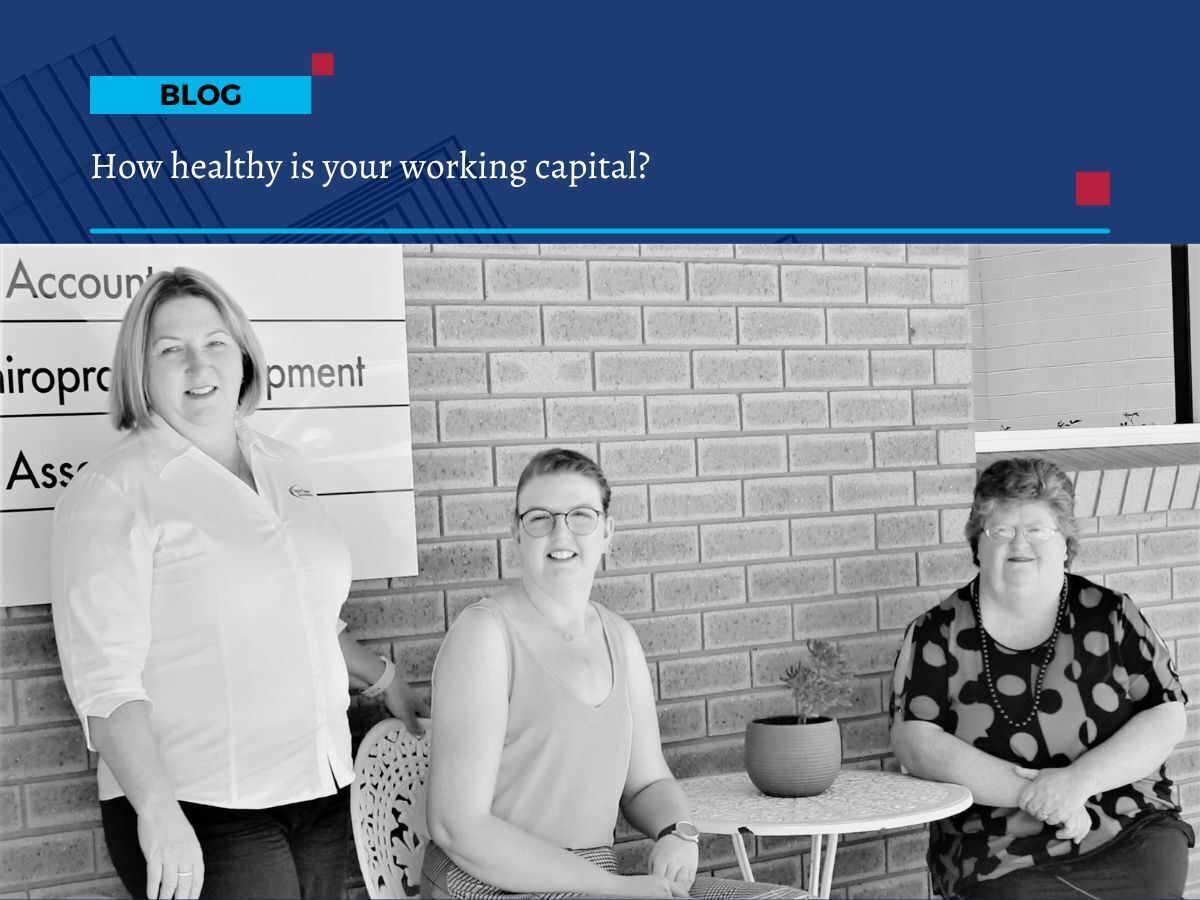

Three women from First Class Accounts Ovens and Murray sitting and standing outside an office building, smiling at the camera with a brick wall and business signage in the background.

How healthy is your working capital?

How healthy is your working capital?

We all know that cash is king when it comes to business success, but what exactly is ‘working capital’ and how does this financial metric help measure the health of your business?

Working capital is made up of the cash and assets that are available in the business to fund your operations and keep you trading. It is worked out by taking your current assets (the things you own) away from your current liabilities (the things you owe to other people).

If your working capital is strong, you have enough on hand to pay your team, your suppliers and the ATO on time and still have room to move. If it is weak, even a small bump in expenses or a delay in customer payments can cause stress.

In 2025, with increasing costs and tighter margins for many Australian businesses, keeping an eye on working capital is more important than ever. First Class Accounts Ovens and Murray helps by keeping your bookkeeping up to date, so you always have a clear picture of your numbers instead of guessing.

Why working capital matters

So, why is working capital such a critical metric?

Having the liquid capital needed to trade It’s possible for your business to be busy, successful and profitable, but for your cash position to still be in poor health and that can have a serious impact.

If you can’t readily convert your assets into liquid cash, it’s a struggle to meet your cashflow goals, pay your bills and fund your day to day operations. But with the optimum level of working capital, you strengthen your balance sheet and put the company in a solid financial position.

Healthy working capital gives you breathing space. You can pay people on time, take up good opportunities when they arise and sleep better knowing what is coming in and what is going out.

This is where cash flow confidence becomes practical. When First Class Accounts Ovens and Murray is managing your day to day bookkeeping and people payments, you can see your true position more clearly and make decisions based on real numbers, not gut feel.

How to achieve a healthy level of working capital

To achieve a healthy level of working capital you will need to:

Proactively manage your cashflow

Cashflow feeds your working capital by pumping liquid cash into the company and keeping the balance between assets and liabilities in a strong position. But to achieve this, it’s vital to achieve a positive cashflow position, where your cash inflows are greater than your cash outflows. This means getting paid on time, lowering your outgoings and keeping a close eye on your ongoing cash position.

In real terms, this might look like tightening up your debtor follow up, reviewing your payment terms, spreading larger bills over a realistic period and planning for regular commitments such as wages, super and GST so they do not come as a surprise.

First Class Accounts Ovens and Murray can help you put simple, practical systems in place to support this. That might include regular cashflow reports, payment scheduling, and clearer visibility of who you need to pay and when. The aim is to make your cashflow more predictable, which improves your working capital and reduces stress.

Monitor and forecast your financial position

Running regular financial reports helps you stay in control of your finances. With careful monitoring and forecasting of your cash position, you can ensure you don’t end up in a negative cashflow position, without the requisite working capital to trade and fund the next stage in your business plan. 

Cloud accounting software and business intelligence apps have made it easier than ever to create up to date, real time reports and run dashboards that show your key metrics.

In 2025, there is a wide range of connected apps that integrate with platforms such as Xero to give you clearer insights. These tools can help you track cashflow, see upcoming payroll, GST and PAYG obligations, and spot trends before they turn into problems.

First Class Accounts Ovens and Murray offers business app advisory to help you choose and set up the right tools for your business. We then use those tools to give you regular, easy to understand reports and forecasts, so you know how healthy your working capital is and what is coming up over the next few weeks and months.

Use additional finance when required

If working capital is looking thin on the ground, then additional funding may be needed to bolster your balance sheet. Short term finance options, such as overdraft extensions or invoice finance, and longer term business loans can be needed to keep working capital on an equilibrium.

Before taking on any extra finance, it is important to understand why your working capital is under pressure and whether it is a temporary issue or an ongoing pattern. That way you can choose the most suitable type of funding and avoid simply masking a deeper problem with more debt.

By keeping your books current and providing clear reports, First Class Accounts Ovens and Murray can help you and your accountant or finance provider see the full picture. This makes it easier to have informed conversations about what kind of funding, if any, is appropriate for your situation.

Support to keep your working capital healthy

Working closely with your accountant and bookkeeping team is vital if you want to promote the ideal level of working capital in the business. Together, they can help manage your cashflow, monitor your financial metrics and support you to access additional finance and funding when your capital needs a boost.

First Class Accounts Ovens and Murray focuses on reliable, done for you bookkeeping, cashflow confidence and real world advice. We become part of your team, keeping your numbers accurate and your reports clear, so you can make better decisions about working capital.

If you would like to understand how healthy your working capital really is, and what you can do to improve it, talk to First Class Accounts Ovens and Murray about reviewing your current position and setting up better support around your cashflow.


What is working capital in a business?

Working capital is the difference between your current assets and current liabilities. It shows whether you have enough available resources to pay your short term commitments.

How does working capital affect cashflow

Working capital affects how easily you can pay suppliers, wages and tax on time. Strong working capital supports smoother cashflow and reduces day to day financial pressure.

How can I improve my working capital

You can improve working capital by tightening debtor collection, managing expenses, planning for regular commitments, using helpful apps and keeping your bookkeeping up to date.

Do I need extra finance to fix working capital problems

Sometimes extra finance is useful, but it should be based on clear reports and an understanding of why your working capital is under pressure, not used to cover ongoing problems.

How can First Class Accounts Ovens and Murray help with working capital

First Class Accounts Ovens and Murray keeps your books accurate, helps you monitor cashflow and working capital, and provides real world advice so you can make better decisions.

Review your expenses and save yourself money

Review your expenses and save yourself money

Review your expenses - and save yourself money


Running a business will always mean incurring certain expenses or 'spend'.

Whether you’re a large family business or a small fledgling startup, there will be costs, overheads and supplier bills that mount up – and these expenses will gradually chip away at your cash position, making it more difficult to grow and make a profit.

So, what can you do to reduce your spend levels? And what impact will this have on your overall margins, profits and ability to fund the next stage in your business journey?

Getting proactive with your spend management

Spend management is all about getting in control of your expenses – and, where possible, aiming to reduce the level of costs and overheads that you incur as a company.

Why does this matter? 

Well, excessive spending eats into your cash flow, reduces your profit margins and stops you from achieving the profits that you’re capable of as a business.

So if you can get proactive with your spend management, you can actually make your company a far more financially productive enterprise – and that’s great for your overall business health.

So, what can you do to reduce spend and slim down your company expenses?

Here are some key ways to reduce expenses:

Reduce your overheads

Your overheads are the unavoidable costs of running your business, producing your products or supplying your services.

If you have bricks and mortar premises, these overheads will include rental payments, utility bills and even the cost of paying your staff.

Drill down into the numbers and see where there are opportunities to reduce these overhead costs. That could mean moving to smaller premises, or reducing the size of your workforce, to reduce payroll expenditure.

Put limits on staff expenses

If your employees can claim expenses, or buy raw materials and equipment with the company’s money, these costs can soon start to rack up. It’s a good idea to put a spending limit in place, so each staff member can only spend up to an agreed amount.

Having a clear expenses policy helps, as will training up your staff in good spend management techniques. Expenses cards – such as WebexpensesSoldo or Pleo – allow you to quickly set spend limits, track expenses and pull your expenses data through to your cloud accounting platform for processing.

Look for cheaper suppliers

If you can reduce your supplier costs, this will go a long way to bringing down your overall spend.

If you’ve been with certain key suppliers for years, look around for new quotes, look at current market prices and see if you can negotiate better deals. And if your old suppliers aren’t flexible enough, try swapping to newer, more eager suppliers who will be willing to meet you in the middle on price.

Make your operations leaner

The bigger your operational costs are, the less margin you’ll make on your end products and services.

One way to resolve this is to aim for a ‘lean approach’, paring back your staff, resources and operational complexity to the bare minimum.

By making the business as lean as possible, whilst still delivering the same output, you keep your revenue stable, but reduce the spend level that’s eating into your cost of goods sold (COGS). The smaller your COGS, the more profit you make on each unit or sale – and that means better cash flow, more working capital and bigger profits.

Talk to us about improving your spend management

If you’d like to get in control of your expenses, we’d love to chat.

We’ll review your current costs, run forecasting, and help highlight the key areas where expenses can be cut. Then we’ll help you formulate a proactive spend management programme, to reduce your unnecessary spending.

Accessing business funding

Accessing Business Funding

Cash is the fuel that powers your business. But, does your business have enough capital in your company to actually fund your short, medium and longer-term goals?

Whatever your business aims are, you’re likely to need some additional finance at some point along the business journey. But, how does this extra cash then benefit the growth, scaling up and (eventually) the sale value of your business?

The value of extra capital in the business

Third-party business finance comes in many forms.

It might mean talking to your bank about agreeing an overdraft extension, or taking out a business loan from a business funding provider. It may even mean looking at specialist finance products, such as:

  • asset finance (for buying new equipment)
  • invoice financing (for quickly raising cash from your outstanding invoices)
  • government-backed grants and tax incentives for enterprising businesses.

Whatever finance route you take, it’s important to understand the impact that this extra capital will have for your business. And for your longer-term success.

Accessing business funding

Accessing business funding provides a number of opportunities for your business.

Boosts your working capital

Funding gives you the liquid cash needed to stabilise and expand your operations.

With enhanced working capital, you can overcome your post-pandemic cash worries and get your balance sheet looking healthy once again.

You can also take on new work, projects and customers, safe in the knowledge that you can cover the initial expenditure while waiting for new revenue streams to bear fruit.

Provides investment in your growth strategy

If you’re looking to expand your operations or scale up the business, extra funding gives you the capital to invest in this growth.

You have the capital to take on more people, to invest in equipment, plant and new technology, and to scale up the overall capacity of your business.

Strengthens your company's balance sheet

The health of your balance sheet is determined by the balance between your assets (the things you own, including cash, within the business) and your liabilities (the debts that you owe other people).

Additional funding in your business helps to:

  • increase your assets, which, in turn, helps to boost your working capital and liquid cash
  • enhance your asset performance
  • improve your capitalisation structure as a viable business.
Makes your company more valuable

With more cash in the bank and more capital to draw on, your company becomes a more valuable, and a more attractive proposition in the marketplace.

This healthy financial position is invaluable when approaching lenders for more funding, when buying out a competitor or even when selling the business and bringing your exit strategy into play as the owner.

However, if you’ve taken on private investors to provide part of your funding, you do have to consider that these investors will likely now own shares in the business – limiting your overall ownership and control of the company.

Whatever the next stage is for your business, the journey will be easier with a robust, tailored funding strategy behind your business plan.

Talk to us about creating a tailored funding strategy

xeros short-term cashflow feature

Xero’s short-term cashflow feature for businesses

Xero's short-term cashflow feature for businesses


Business cashflow is simply money coming in and money going out of the business. Your outgoings will include things like rent, payroll, taxes and supplies. Your income will be revenue from sales but might also include investment funds or the sale of assets.

For most businesses, income and expenditure don’t always happen at the same time so focussing on strong cashflow management will help you prepare for the shortfalls and also manage surplus income.

Cashflow reports allow you to look back at cashflow in your business. This can uncover cashflow patterns over time and show you how much money you need to run your business each month.

Cashflow forecasts look forward by combining payment dates and due dates for invoices, to give you an idea of what your cashflow will be like going forward.

Managing healthy cashflow

Xero’s short-term cash flow feature gives you an up-to-date dashboard view of your organisation's cashflow. You can choose multiple bank accounts and see the projected cashflow over 7-30 days. The more information you include, the more accurate your forecast will be.

Healthy cashflow management gives you better control, so you are more prepared for growth or for the unexpected. Read the article at Xero Central to learn more about this feature.