
busy01 Archives - Page 7 of 9 - First Class Accounts Ovens and Murray and Busy01 Consulting

Tag Archives for " busy01 "

egain control of your business

Regain control of your business

Regain control of your business

Not all business owners want to grow their business. Some may just want more control. After all, your business is there to serve you; you shouldn’t be a slave to it. So, how do you regain that much needed control?

There are three essential tools all businesses must have:

  1. An annual Business Plan.
  2. An annual forecast.
  3. Ongoing reporting and accountability.
The annual Business Plan​

Your Business Plan shouldn’t be a lengthy document living in a dusty drawer. It should be on one page and displayed somewhere highly visible so you can review it regularly.

Best developed using an independent facilitator, your Business Plan should articulate exactly what you want from your business; the hours you want to work, the holidays you want to take, and the income you need.

You’ll identify Key Performance Indicators (KPIs) to monitor, vulnerabilities to manage, and opportunities to act upon. You’ll set no more than four key goals for the year, breaking these down into quarterly goals with clear actions to complete in order to achieve them.

The annual forecast

Your forecast will record how cash must flow throughout the year to give you what you want from your business. Too often business owners only create a forecast because the bank has requested one.

The forecast will highlight your business's weaknesses, when cashflow problems might arise, and how you need to manage your business financially to achieve the goals in your Business Plan. Don’t wait for your bank to request a forecast; it’s an essential tool to ensure the success of your business every year.

Ongoing reporting and accountability

The value lies in the implementation of your Business Plan and annual forecast. Constantly reviewing your progress against your targets is crucial. Ongoing reporting allows you to track actual results against your forecast to ensure progress towards your goals.

The best way to ensure you don’t fail to implement the plan is to be held accountable by someone independent. Every business owner needs a coach. A great coach will work with you to get a result better than you could achieve on your own. They’ll uncover the root causes of problems in your business and empower you to do better. Most importantly, they’ll hold you accountable to getting the important stuff done.

There are no magic bullets to business success. All businesses need these three tools.

Get in touch to discuss how we can work together - to help you regain control of your business.

“Dreams x Goals x Plans x Actions = Your success” - Brad Sugars

Contact us here.

be do have

Be, Do, Have

Be, Do, Have

Our success in life depends largely on our mindset. Those who wait until conditions are perfect are unlikely to achieve their goals as they’re always waiting for the right time and never take that first step.

There are three small words whose order can heavily influence the outcomes we achieve: be, do, and have.

After deciding on your goals, the next step is to consider who you need to be in order to achieve your goals, rather than what you need to do.

Compare the following sentences:

“When I have a more profitable business, I’ll do great things with my family and be a great partner and parent… first I need to work a bit harder to sort out my business and finish these projects, then everything will fall into place.”

“In order to be a great partner and parent, I need to work smarter so I can have more time with my family.”

Now, if this resonates with you, how can you work smarter?

When you focus on who you need to be first, you’ll start to prioritise doing things in a way which is consistent with that role. The things you’ll have as a result become the bi-product of who you are. In contrast, if we wait to achieve what we think we must have in order to be a better person, we risk never changing our habits.

So, who do you really want to be?

Start being that person today. Think like that person, speak like that person, and act like that person.

Let the be drive what you do from now on. You’ll be amazed at how quickly you’ll get what you want (the have).

Do you need perspective on how you can work smarter? We can help!

“You’ve got to be before you can do, and do before you can have.” - Zig Ziglar


Contact us here.

your workspace can impact productivity

Your workspace can impact productivity

Your workspace can impact productivity

A great office space is about keeping your people happy, productive and working towards the key goals of your business.

An office is more than a place to put your desks, it is the heart of your business and the space where your people will spend most of their working day. Your office needs to create the right atmosphere for your people and inspire productivity.

A great workspace motivates your team

Engaged employees make their organisations 17% more productive and 21% more profitable, according to Gallup’s State of the Global Workplace report. Keeping your people engaged and motivated is a core aim of your workspace design.

There are some key universal traits that any good workspace will need if your aim is to boost team motivation, productivity levels and, ultimately, profitability.

A good workspace will include:
Flexible working options

A good office space should be an environment that's conducive to different types of work. If staff have different roles, and carry out different activities throughout the day, a mix of quiet spaces, communal areas, private meeting rooms and breakout space for catch-ups can cater for this.

Access to drinks and refreshments

Somewhere for staff to re-hydrate, refuel and stay productive. Offer free coffee and tea. A bowl of fruit or healthy snacks is a nice way to support time-poor employees who don’t have time to head out.

Privacy when it’s required

The seclusion of a meeting room is great for making for private calls, having team meetings or carrying out one-on-one conversations with employees and fellow directors.

Space to relax and kick back

Outside of the usual working day, a more social space in the office provides somewhere where people can hang out and enhance the social side of the team. The ‘creative agency with a foosball table’ has become a slight cliche, but having a space with comfortable furniture and recreational activities can be a real plus for many employees.

Great branding and design 

The design of the workspace isn’t just about the choice of paint colour. It's important to create an aesthetic and ergonomic design that reflects your brand personality, but also works as a highly effective space for your people. A professionally designed and branded workspace can have a huge impact on how your staff and customers perceive your company.

Enhancing your workspace

If you’re looking to refresh your office space, think about the elements that will improve the experience for your staff and your customers. A successful office revamp makes everyone happy and boosts productivity.

Team developing great leadership

Developing great leadership

Developing great leadership to scale your business

There are several aspects of successfully scaling up your business one being having comprehensive systems. Another being developing great leadership.

Have you heard the quote,

“What got you here won’t get you there”?

These are wise words (and the title of a book we encourage you to read!) are from Marshall Goldsmith.

When choosing to scale your business many leaders focus on their systems and teams, which is important. But you should also focus on scaling yourself.

Developing great leadership

Most reasons why businesses fail, directly and indirectly, point to leadership failure.

From poor planning to poor hiring, poor communication to poor process, poor capacity to poor execution - most things can be fixed with great leadership.

Scaling the business will make new demands on a leader’s time and attention. And it’s critical that these are both focused on the right things:

1. Planning

Setting a clear vision and relevant business goals. Having a regularly reviewing progress. And resetting goals to drive performance improvement.

2. Inspiring

Motivating others to achieve more than before. Showing them their potential to make an impact.

3. Empowering

Enabling your team to find their own solutions by guiding them with your support, trust and encouragement.

4. Culture

Demonstrating allegiance to your team and standing for the business’s core values.

5. Innovating

Continuous improvement in people, product, and process.

6. Personal growth

Developing and supporting your future leaders with mentoring and guidance.

Great leadership is about influencing others in the direction of a common goal.

While there can only be one leader of a business, there are different areas that need individual leaders. People can lead multiple areas initially. But, as the business grows, look to empower others. Delegate the leadership of some areas to ‘leaders in training’.

On a scale from 1 to 10, how well do you rate your performance on the above six categories?

Where can you scale your leadership?

If you need help? Get in touch.

“The function of leadership is to produce more leaders, not more followers.” - Ralph Nader

Choosing a new business bank account?

Choosing a new business bank account?

A business bank account is an essential requirement for any business. But with so many banking providers out there, how do you know which business account to choose?

The key is to know what you require from a bank account, and to choose a bank that understands the banking, financial and funding needs of your business.

Choosing an account that fits your business needs

Whether you’re a new sole trader or an established limited company, it’s advisable to maintain a clear divide between your personal and business money. So it’s vital to open a business bank account, giving you a separate account to handle your business transactions.

The choice of available accounts can be baffling, with the big corporate banks and high-street providers offering a range of accounts, and new digital challenger banks also adding to the available options for business owners.

When looking for a business account, consider:

  • Bank charges – some banks offer free banking, others will charge you a monthly fee. And most accounts will charge you for things like cash withdrawals, payments in foreign currencies and going into (or over) your agreed overdraft limit.
  • Earning interest – look at the interest rate paid on the balance in your account. The higher the interest percentage, the more money you’ll earn on the cash in your account. The rate is unlikely to be high, but it’s still worth assessing the potential for a return.
  • Overdraft facilities – cashflow can ebb and flow in any business, so an agreed overdraft facility can often be a lifesaver when cash becomes tight. Look at what overdraft is available and what you’ll pay in penalties if you exceed the agreed limit.
  • Access to finance – if working capital gets exceptionally low then you may need to borrow a lump sum of money. If the bank has attractive options for bank loans, invoice financing or asset financing, that gives you and your business more flexibility.
  • Mobile apps and technology – digital is changing the banking sector at an incredible pace, so look at the quality and functionality of the banks internet banking, mobile banking apps and online financial management tools. Many of the emerging challenger banks are digital-only and offer a great online experience for business users.
  • Support and relationship management – the big banks have cut back their bricks and mortar presence on the high street in recent years. Look at whether you’d have access to a business banking adviser, or whether support is all online or done over the phone. A good relationship with your bank is invaluable when cashflow is tight.

Talk to us about selecting your ideal bank account

If you’re in the market for a new business bank account, come and talk to us. We’ll help you understand the key requirements you need from your account, and the banking providers that are most suited to delivering the right flexibility for your business.

We’re here to help you, every step along the way. Get in touch!

Photo of light bulb with INTEGRITY conceptual words isolated on white

Hold me accountable or else what?

Hold me accountable or else what?

Most business owners understand that the only way to ensure something gets done is to document what is expected, assign it to the right person, and set a due date. But what do you do if the task isn’t done? What are the consequences of this inaction?

Think back to your school days when you had homework... 

Maybe you were super organised and got stuck in as soon as the work was assigned, or perhaps you completed it on the school bus the morning it was due. Either way, why did you get it done? Chances are there were clear consequences set by your teacher if you didn’t complete it - a few whacks with a stick or a lunchtime detention – that’s what we call accountability and consequence.

Unfortunately, many business owners forget these lessons from school. Sure, we set the tasks and actions, assign them to people and, if we’re really good, set a due date. From there, we so often forget to hold the person to account. Very rarely is there a consequence for the person responsible for the task. The consequence for the business owner, however, is ultimately a poorer performing business.

Here’s seven rules to tighten up your accountability:

  • 1
    Ensure at the outset that everyone is clear about why the task is important.
  • 2
    Assign the task to the right person and be available to give support.
  • 3
    Be specific and crystal clear with all communication. Remember, they don’t know what they don’t know.
  • 4
    Ask them to repeat back the instructions, to ensure the message was interpreted correctly.
  • 5
    Set a realistic time-frame and provide delivery instructions and expectations.
  • 6
    Agree on consequences for inaction.
  • 7
    Have quick catch ups to check progress is on track.

Now, ask yourself…

What actions can I take to improve accountability and outcomes for my team? What changes or improvements do I need to make to my planning processes and reporting systems? And most importantly, who is the best person to hold me to account as a business owner? Accountability goes both ways, especially if you want to be an authentic and effective leader.

"Accountability is the glue that ties commitment to the result."Bob Proctor.

closing your business

Closing your business

Closing your business

Are you consider closing your business? Or have you recently sold your business?

If so, do you know what your obligations are regarding your accounts?

If you are closing your business or the business has been sold, you need to get all the data entry up to date, for the final accounts to be completed by the accountant.

This involves reconciling all the bank accounts, loan accounts and managing any outstanding invoices and bills.

You also need to ensure all your employees final pays are processed.

It’s important that your accountant has the details of everything to do with the business sale - the contract and settlement documents etc.

If this sounds like a mammoth task we can help.

As your bookkeeper, we will check if you or your accountant will be cancelling all your relevant registrations such as:

  • Cancelling company and business name through Australian Securities and Investments Commission (ASIC)
  • Notifying the Australian Taxation Office (ATO)
  • Cancelling Australian Business Number (ABN)
  • Cancelling other tax registrations such as Goods & Services Tax (GST)
  • Making GST adjustments on final activity statements
  • Lodging final tax returns
  • Looking at any insurance requirements for the business, such as run off cover (where you are insured for any legal claims that are made after you close your business)

It’s really important that registrations are not cancelled without checking with your accountant first.

Sometimes business goes bad

Sometimes things go wrong, things that can be out of your control or can’t be helped, And the sad outcome of that is that businesses can go bad.

It’s obviously a challenging time when this happens. So, it’s important to understand what is involved.

Firstly, if you’re working with a bookkeeper and accountant, they can often identify when things aren’t going and can try to help you get your affairs in order. Unfortunately, sometimes this isn’t enough, and you have to call in the Liquidators.

The liquidation process will be dependent on your business structure, there are differences in the process for sole traders and companies.

The Liquidator will most likely contact your bookkeeper and accountant to obtain access financial records. Before providing any information, your bookkeeper and accountant should check that you are actually in liquidation. There are scammers out there. This is achieved by searching your company name or CAN on ASIC.

If you are in liquidation, you should also be aware that, as a creditor, your bookkeeper and accountant will most likely only continue doing any further work for you if the Liquidator has authorised the work.

As mentioned previously, liquidation is a challenging time. Understanding what is required of you and your bookkeeper can help ease the pain a bit.

We’re here to help you, every step along the way. Get in touch!

Get on top of time wasters in your working week

Get on top of time wasters in your working week

There are 1,440 minutes in a day and each of us have the same allocated amount. Some people manage to achieve much more than others. So, how can we free up time to help lead a better business and ultimately a happier life?

The top 10 time wasters:


1. Lack of clear goals.

Planning and setting SMART goals provides clarity. SMART = Specific, Measurable, Attainable or Achievable, and most importantly Time-bound. Have your goals documented and visible.

2. A messy desk.

Desk clutter equals mind clutter. Tidy your work-space each day before you leave. Also consider how paperless you are; paper is part of the problem.

3.  Procrastination and shifting priorities.

Avoid unnecessary pick up and put down. Multitasking is a productivity myth. Plan your day carefully and stay focused; don’t deviate unless it’s really necessary.

4. Interruptions (from humans and technology).

Establish ground rules for others, and set yourself clear parameters regarding your technology distractions, e.g. turn off your email notifications and only check emails between tasks. If it’s urgent, they’ll call or tap your shoulder.

5.  Ineffective delegation (and abdication).

Responsibility and doing are not the same. Invest time in creating clear processes and empower others to do more for you. When delegating a task, responsibility still falls on you… and without a clear process, you are setting someone up to fail which will ultimately reflect poorly on you.

6. Ineffective systems.

Mistakes can usually be attributed to ineffective systems. Involve your team to get buy in and LEAN up processes where possible. Eliminate systems that don’t add value; always go back to your purpose.

7. Inability to say 'no'.

We are defined not just by what we say yes to, but what we say no to. Planning helps us to say no to things that don’t align with our purpose and goals.

8. Ineffective meetings.

Every meeting needs a purpose, an agenda and clear objectives. Stick to the agenda, document outcomes and consider which meetings could be replaced with reporting or an online planning tool (such as Trello).

9. Ineffective email use.

Think twice before playing email tennis. Ask yourself: 1.) Is the directive clear? 2.) Is the tone correct? 3.) Is it better to walk five steps to have a conversation?

10. Poor planning.

Effective planning has three key components: a one page plan (with goals, KPIs and required actions), regular reporting to ensure continuous improvement, and accountability.

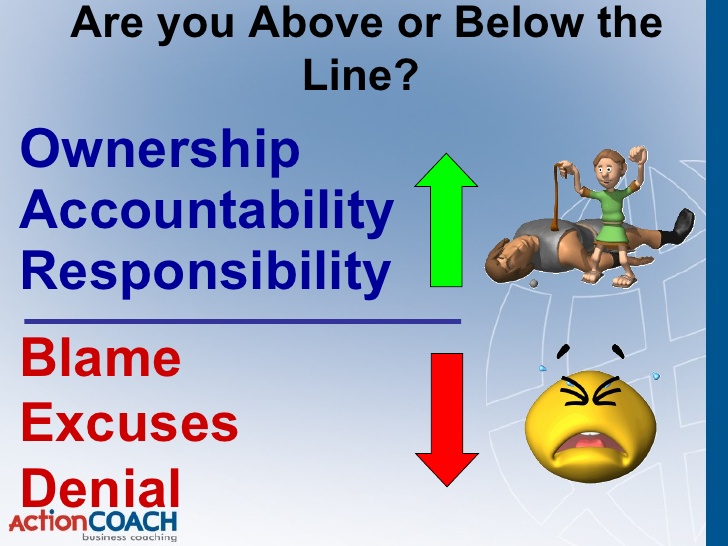
What are your biggest time wasters? Identify your top 3 and take ownership and responsibility to minimise them today!

"Regretting wasted time is wasting more time." - Anon


Talk to us about how we can help you plan more effectively


Reporting PAYGW

Reporting PAYGW correctly

Reporting PAYGW Correctly 

PAYG and claiming tax deductions

From July 1 2019, If you don’t meet PAYG withholding obligations for your workers, by not withholding tax from their payments and not reporting it to the ATO, you could lose your tax deduction.

This will apply to income tax returns lodged for the 2020 financial year and beyond.

If you withhold tax from payments to workers, you must withhold the required amount and report correctly to the ATO in order to receive a tax deduction for your business.

PAYG withholding and reporting obligations apply to payments for:

  • Salary, wages and other payments to employees
  • Directors' fees
  • Religious practitioner payments
  • Labour hire arrangements
  • Voluntary withholding arrangements
  • Payments to contractors with no ABN

Withholding rules still apply to cash payments. Similarly, for non-cash payments such as property or exchange of services, withholding rules still apply even if your worker agrees to receive a non-cash payment in place of money.

PAYGW

The payment of PAYGW to the ATO is a separate issue. The new rules are aimed at getting employers to report correctly and on time. Once you have reported an amount to the ATO, they expect payment of that obligation by the due date.

If you make an honest mistake, such as treating an employee as a contactor, you won’t be penalised. You can correct your mistake by lodging a voluntary disclosure

Talk to us

Contact us to review your PAYGW reporting obligations.