business growth Archives - First Class Accounts Ovens and Murray and Busy01 Consulting

Tag Archives for " business growth "

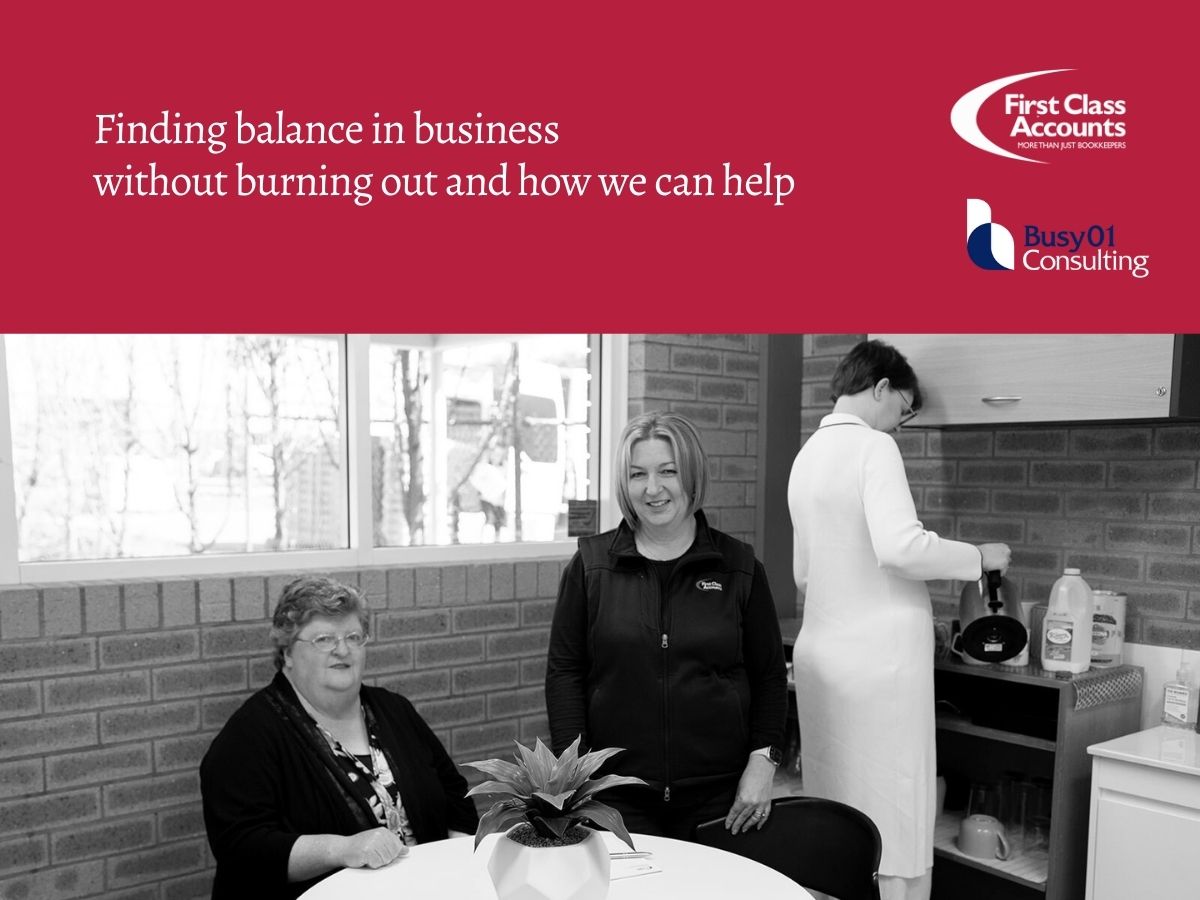
Three women from First Class Accounts Ovens & Murray and Busy01 Consulting in a shared office kitchen area, standing and seated around a table, representing supportive business collaboration and balance

Work life balance for business owners

Finding balance in business without burning out

Work life balance is talked about constantly, yet many business owners feel further away from it than ever. When you are managing staff, cash flow, systems, compliance, and customer expectations, balance can feel unrealistic.

For many established businesses, the issue is not a lack of effort. It is that too much sits with the owner, and too many decisions rely on them being available at all times. This is where structure, systems, and reliable support start to matter.

This article looks at practical ways to create balance that actually works in a real business environment, not quick fixes or lifestyle tips that ignore commercial reality.

Prioritise what actually needs your attention

In many businesses, everything feels urgent. That is usually a sign that priorities are unclear, not that everything genuinely requires immediate attention.

Start by separating work that only you can do from work that simply needs to be done. Strategy, key decisions, and leadership often sit with the owner. Day to day administration, data processing, and routine tasks do not.

Using task and project management tools can help, but only if they reflect how your business actually runs. For some businesses, simple task lists work. For others, job based or workflow tools are more effective. The goal is not more technology, but clearer visibility of what matters most and what can wait.

When priorities are clearer, pressure reduces. You stop reacting constantly and start working with intent.

Delegate and remove single points of pressure

Delegation is not about losing control. It is about removing bottlenecks.

When one person holds all the knowledge or approvals, work slows down and stress increases. This applies just as much to bookkeeping, payroll, and compliance as it does to operations.

Many business owners delay delegating financial tasks because they worry about accuracy or compliance. In reality, keeping these tasks in house without the right expertise often increases risk. Errors in payroll, super, or reporting usually cost more time and money to fix later.

Engaging a reliable bookkeeping partner means key tasks are handled accurately and consistently, without relying on one internal person being available. It also creates breathing space for you, as the owner, to focus on running your business rather than chasing paperwork.

Protect time by planning for it properly

Time off rarely happens by accident. If it is not planned, work will always fill the space.

This includes time away from the business, but also time to review numbers, plan cash flow, and check that systems are working as they should. When business owners only look at financial data under pressure, stress increases and decision making suffers.

Regular reporting, scheduled payroll, and clear payment planning reduce the mental load. When you know staff, suppliers, and the ATO are covered, it becomes easier to step away without worrying about what might go wrong.

Use technology that genuinely reduces work

Technology should reduce effort, not add complexity.

In 2026, most businesses are using cloud accounting software, but many are not using it well. Manual work still exists because systems are not set up correctly or apps are not integrated properly.

Choosing the right tools for your industry and workflow makes a significant difference. Automated bank feeds, payroll systems, and document capture tools reduce data entry and errors. When information flows correctly between systems, reporting becomes more reliable and decisions easier.

First Class Accounts Ovens & Murray supports businesses by recommending and implementing apps that actually suit how they operate. The focus is always on accuracy, efficiency, and clarity, not technology for its own sake.

Use trusted support, not just peer advice

Peer support is valuable, but it should not replace professional advice.

Talking with other business owners can provide perspective, but every business has different cash flow pressures, staffing structures, and compliance obligations. What works for one business may not suit another.

Having a bookkeeper who understands your business, works alongside your accountant, and provides clear explanations gives you reliable input when decisions need to be made. This removes guesswork and reduces reliance on informal advice.

Build a business that supports your life

Enjoying your work is important, but enjoyment often disappears when pressure builds and systems fail.

Balance comes from knowing the foundations are solid. Payroll is processed correctly. Cash flow is visible. Compliance is handled. Systems support the business rather than slowing it down.

If you want to create more balance without risking accuracy or control, First Class Accounts Ovens & Murray can help. Through reliable bookkeeping, payroll support, and practical app advice, we remove the load that sits quietly in the background of many businesses.

Get in touch to talk about how better systems and support could free up time and reduce stress in your business.


How can bookkeeping help with work life balance?

Reliable bookkeeping improves cash flow visibility, reduces compliance stress, and removes routine tasks from the owner.

Does outsourcing payroll reduce stress?

Yes. Outsourcing payroll ensures staff are paid correctly and on time, reducing risk and mental load for business owners.

Can business apps really save time?

When chosen and set up correctly, business apps reduce manual work and errors, freeing up time for more important tasks.

When should a business owner get bookkeeping support?

When accuracy, cash flow clarity, and time pressure start affecting decision making, it is time to seek support.
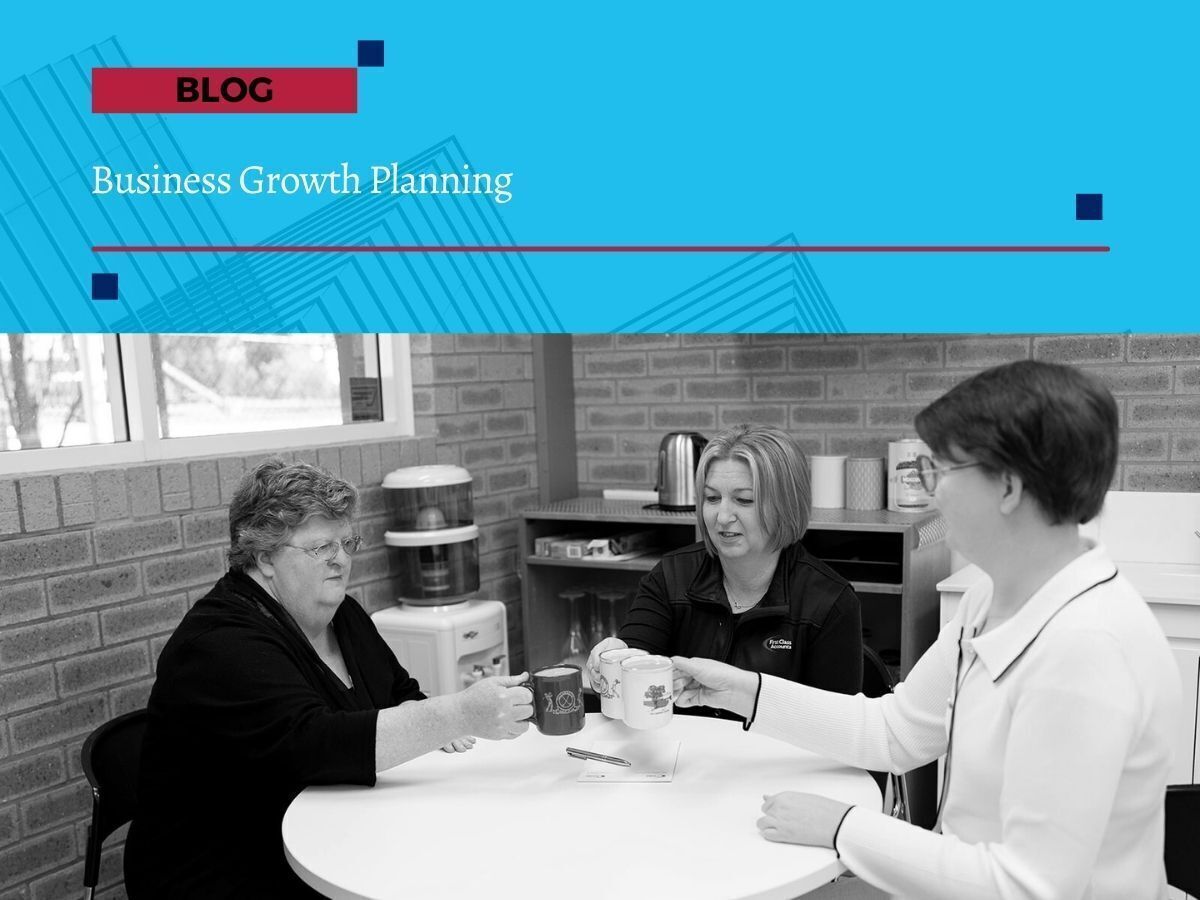
Three businesswomen from First Class Accounts Ovens & Murray sitting together at a table, sharing coffee and discussing business growth planning.

Are you playing in the growth game?

Business growth planning for 2025

Are you actively playing in the growth game, or has the last year flown by without much time to stop and reflect?

Think back to where your business was 12 months ago. Have you moved forward, stayed the same, or slipped backwards?

It’s easy to get caught up in the day-to-day operations. Most business owners spend their energy putting out fires, managing staff, and serving customers. But setting aside time to review where you’ve come from and where you’re heading is one of the most valuable things you can do. 

Growth doesn’t always happen by accident, it comes from planning, the right numbers, and clear action steps. That’s where First Class Accounts Ovens & Murray can support you with accurate bookkeeping, reliable reporting, and practical advice that gives you clarity on your business performance.

Growth isn’t just about taking risks

Growth doesn’t always mean taking on more risk, working longer hours, or creating unnecessary stress. 

In 2025, growth is more about working smarter than harder. That might mean using business apps to automate tasks, streamlining payroll, or getting better visibility of your cash flow so you can make confident decisions.

The first step is to identify where the opportunities for growth are in your business and your industry. Maybe your competitors are missing a service you could provide. Maybe technology could save you time and costs. Once you know where the opportunities are, the next step is mapping what you and your team need to do to take advantage of them and preparing for the challenges you’ll face along the way.

At First Class Accounts Ovens & Murray, we help business owners spot these opportunities by giving them accurate numbers and reports you can rely on and implementing apps to create efficiencies.

Practical tips to guide your business growth

Here are some practical tips to get you thinking about growth in 2025:

Do an audit to document your growth over time

Take a look at your financials, payroll records, and cash flow forecasts to see how your business has changed. Analysing this information will help you identify what’s working, what isn’t, and where the gaps are. This is where reliable bookkeeping and reporting make all the difference.

Put a one-page plan together 

Keep it simple. Write down your key objectives for the next 12 months and list the specific steps needed to achieve them. Identify who will be responsible for each task. Having your plan in writing keeps everyone accountable and focused.

Set key performance indicators (KPIs) 

Choose a handful of numbers that matter most, such as gross margin, debtor days, or payroll accuracy. Revisit these regularly to make sure you’re on track. With tools like Xero and add-on apps, you can automate reporting so your KPIs are always at your fingertips.

First Class Accounts Ovens & Murray can help you build this plan, set up the right systems, and provide clear reporting so you know how you’re tracking at any point in time.

Step back to get the right perspective

As a business owner, it’s tempting to try and do everything yourself. But that often leads to being stuck in the daily grind, leaving no time to think about the bigger picture. 

Taking a step back and getting perspective is critical.

Working with trusted bookkeepers like First Class Accounts Ovens & Murray means you don’t have to do it all alone. We can take care of the bookkeeping, payroll, and reporting, while also giving you the numbers and advice you need to build a realistic business plan.

Turning growth into opportunity

Business growth often feels overwhelming, but with the right plan, systems, and support, it can be exciting and rewarding. When your cash flow is managed, your payroll is accurate, and your bookkeeping is under control, you’re in a much stronger position to make confident decisions about growth.

The truth is, most small business owners don’t need to reinvent the wheel, they just need the right numbers and processes in place. With planning, the right tools, and expert support, you can scale your business to the next level and achieve your growth targets.

First Class Accounts Ovens & Murray is here to help you get started. Get in touch today to discuss how we can support your business growth journey.

Can outsourcing bookkeeping save time for growth planning? Yes. Outsourcing to experts like First Class Accounts Ovens & Murray means you can focus on strategy and growth while staying on top of compliance and reporting.

Common questions about business growth planning

What is the first step in business growth planning?

Start by reviewing your financials and documenting how your business has grown over time. This helps you identify what’s working and where improvements are needed.

Why should small businesses set KPIs? 

KPIs keep your business focused on the numbers that matter most. They give you a clear way to measure progress and make informed decisions.

How can bookkeeping support business growth? 

Accurate bookkeeping provides the data you need to plan, track, and scale with confidence. It ensures you know your numbers and can act on them.

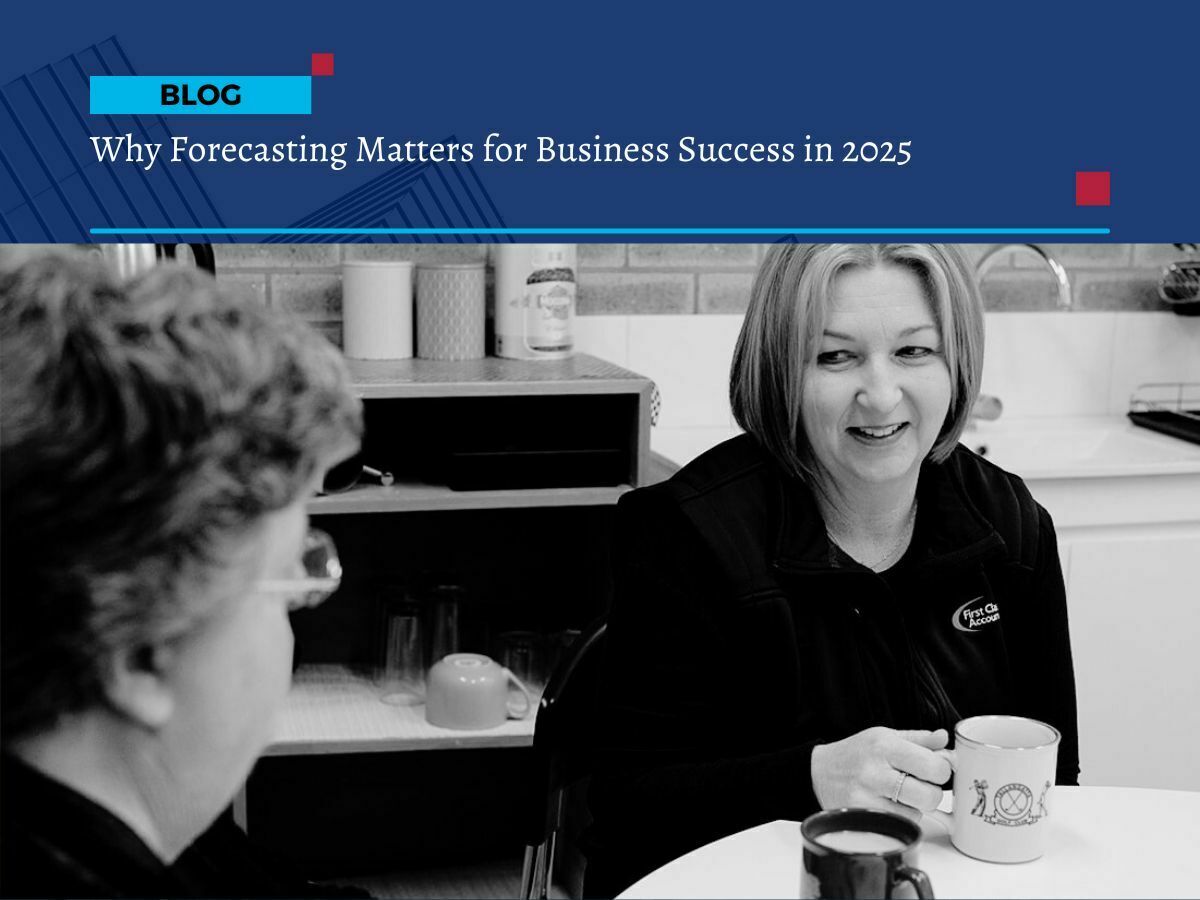
Two women chatting over coffee in an office kitchen, with one wearing a First Class Accounts Ovens & Murray vest, supporting a blog about business forecasting in 2025-26.

What’s in the forecast?

What’s in the forecast?

When you’re heading out for a fishing trip or a hike, you check the weather forecast first. It’s common sense. You want to know what’s coming so you’re prepared.

It’s the same with running your business.

Cashflow is your weather. And your business forecast tells you what’s ahead, sunshine or storms, based on the direction you’re heading.

But unlike the weather, if your business forecast is looking grim, you can change it. You can adjust the sails, shift course, or even rework your entire route. That’s the real value of forecasting. It gives you time to act.

What your business forecast will tell you

A good forecast isn’t just a guess. It’s a tool that pulls together your sales pipeline, expenses, planned investments, and obligations to give you a clear picture of what’s coming.

It can help you:

1. Know if you’ve got enough sales in the pipeline to hit your profit targets

Your sales forecast is more than just a list of potential deals. It’s about tracking what’s likely to convert, when, and how that stacks up against your goals. If you’re falling short, your forecast gives you time to ramp up marketing, re-engage leads, or rethink your offer.

2. Check if your margins are where they need to be

It’s not just about what you sell, it’s what you keep. Are your costs creeping up? Is pricing aligned with the value you’re delivering? Your forecast helps you assess whether your margin supports your profitability targets.

3. Spot if you need to review pricing or production processes

Are you undercharging? Is it taking too long to deliver your service or produce your goods? Forecasting highlights gaps in revenue versus effort, helping you make data-driven decisions about pricing or process improvements.

4. See if your business is running efficiently

Forecasting isn't just about revenue. It can help you assess how much you’re spending to earn that revenue. Are admin or overhead costs blowing out? Is it time to automate or outsource? Forecasting helps pinpoint where efficiency gains could be made.

5. Identify opportunities to reduce costs

Looking at your forecasted outgoings across the year helps you identify recurring expenses that can be reduced, renegotiated, or removed altogether. You’ll see where you’re overspending and where smarter choices can be made.

6. Decide if you should invest more to get a better return

Sometimes spending more is the right move. Whether it's hiring staff, upgrading tools, or investing in marketing, your forecast shows whether that investment is likely to pay off, and how soon. It helps take the guesswork out of big decisions.

7. Know how much to set aside for tax

Surprise tax bills can crush your cash flow. Your forecast should include projected tax liabilities, so you’re not caught off guard. Planning ahead means avoiding panic when it comes time to pay the ATO.

8. Understand how much you can draw from the business

It’s tempting to pull more from the business when sales are high, but will that leave you short next month? A cashflow forecast helps you make informed decisions about your drawings so you’re not undermining your business’s financial health.

9. Plan your debt repayments

Whether it’s loans, credit cards, or equipment finance, your forecast helps you plan repayments without hurting cashflow. You’ll know what you can afford, when you can afford it, and how to manage it without stress.

10. Make sure you’re meeting bank and lender requirements

If you’ve got finance in place, your lender may have covenants or minimum financial thresholds you need to meet. A forecast helps ensure you stay compliant and avoid breaching any conditions – which could impact your funding.

Forecasting helps you take control

The biggest difference between a business forecast and a weather forecast is control.

You can’t stop a storm, but if your business is heading for a rough patch, you can take action. You can boost your sales efforts, reduce expenses, adjust staffing levels, delay non-essential spending, or seek funding in advance.

Your forecast doesn’t just tell you what’s coming. It gives you the power to prepare, adjust and keep things steady.

That’s why a forecast should never be a one-off document that sits in a drawer. It should be a living tool, reviewed regularly (ideally monthly) alongside your actual performance, to make sure you're still on track.

Don’t wait to get soaked – check your forecast now

Running a business without a forecast is like heading out on the water without checking the radar.

At First Class Accounts Ovens & Murray, we build easy-to-understand cashflow forecasts tailored to your business. We help you break it down, so you know what to expect, and what to do if things change.

Need help forecasting? We can set up your budget, map out expected income and expenses, and even run ‘what if’ scenarios so you’re better prepared for anything that comes your way.

We’ll also help you interpret the numbers, spot risks, and identify opportunities, all in plain language, with support when you need it.

Talk to First Class Accounts Ovens & Murray about getting your forecast sorted for 2025-26.

We’ll help you take control of your cashflow, reduce stress, and make confident decisions for the year ahead.

“Planning is bringing the future into the present so that you can do something about it now.” – Alan Lakein

We’re here to help you every step of the way. Get in touch. Let’s make 2025-26 your most prepared year yet.

Building a Better Business in 10 Steps

Building a Better Business in 10 Steps

What are you doing to build yourself a more successful business? There’s no magic bullet; it’s about taking small steps every day to get a bit better than the day before - it all adds up.

You're in Business

Congratulations! Running a business takes courage and commitment. It’s not easy, and at times you might find yourself questioning why you’re even doing it, but you’re here because you had a vision. You decided that being in business was a better way to achieve that vision than working for someone else. And you’re right; you just have to work on it. Good things come to people who hustle.

Starting a business is an achievement in itself. You’ve taken the leap, faced the uncertainty, and now you’re here. This is a significant step that many people don’t dare to take. It’s essential to remember why you started in the first place. Your business is not just a source of income; it's your legacy and your opportunity to make a difference. The road may be challenging, but it's also rewarding.

Continuous Development

You’re likely an expert in what you do. Maybe you’re a mechanic who knows the inside of a car engine like the back of your hand, or perhaps you’re a fashion retailer who can style anyone. This doesn’t mean you’re an expert at running your business, though. It’s hard taking time out of working in your business to work on it. But doing this is essential for its success.

Continuous learning and development are crucial. The business landscape is constantly changing, and staying updated with the latest trends, technologies, and practices is vital. Attend workshops, read industry publications, and seek out mentors who can guide you. Investing in your growth is an investment in your business's future.

There’s no magical overnight solution to building a more successful business. It’s about taking small steps every day to get a bit better than the day before.

So, What Should You Do to Build Yourself a More Successful Business?

We’ve broken it down into ten essential steps:

1. Get Clear on Exactly What You Want

Understanding your goals is the first step in building a better business. Ask yourself what success looks like for you. Is it about financial freedom, providing excellent service, or making a difference in your community? Write down your goals and make them specific and measurable. Clarity is power.

Getting clear on what you want is essential for setting a direction for your business. Take time to reflect on your short-term and long-term goals. Are you aiming to expand your customer base, increase revenue, or launch new products? Whatever your goals, make sure they align with your values and vision. Break them down into actionable steps, and remember, the clearer your goals, the easier it will be to achieve them.

Key actions:

  • Identify your long-term vision and mission.
  • Break down your goals into specific, measurable, achievable, relevant, and time-bound (SMART) objectives.
  • Regularly review and adjust your goals as needed.

2. Be Open to Change and New Learning

The business world is always evolving, and being adaptable is vital. Embrace change and be open to learning new skills or adopting new technologies. This mindset will keep your business competitive and resilient. Remember, change is not a threat; it's an opportunity.

Being open to change is vital in today’s world. Technology, customer preferences, and market dynamics are constantly evolving. Embrace change by staying informed and willing to experiment with new ideas and strategies. Adaptability is a strength that can set your business apart from the competition.

Key actions:

  • Encourage a culture of innovation within your team.
  • Stay updated with industry trends and technological advancements.
  • Be willing to pivot your business strategy if needed.

3. Define Where You Are Now (Warts and All)

Honesty is crucial. Evaluate your current situation, including your strengths, weaknesses, opportunities, and threats (SWOT analysis). This realistic assessment will help you identify areas for improvement and growth. Understanding where you stand will guide your future steps.

Defining your current position requires a candid assessment of your business. Conduct a SWOT analysis to understand your strengths, weaknesses, opportunities, and threats. Identify areas where you excel and aspects that need improvement. This awareness will help you make informed decisions and allocate resources effectively.

Key actions:

  • Conduct a SWOT analysis to assess your current situation.
  • Gather feedback from customers and employees to gain different perspectives.
  • Identify key performance indicators (KPIs) to measure your progress.

4. Make a Plan

A well-thought-out plan is your roadmap to success. Outline the steps you need to take to achieve your goals, including resources, timelines, and responsibilities. Remember, a plan is not set in stone. Be flexible and willing to adjust it as needed.

Planning is the foundation of any successful business. Develop a detailed business plan that outlines your strategies, objectives, and action steps. Include financial projections, marketing strategies, and operational plans. A clear plan provides direction and helps you stay focused on your goals.

Key actions:

  • Create a comprehensive business plan that outlines your strategies and objectives.
  • Set realistic timelines and allocate resources accordingly.
  • Regularly review and update your plan as circumstances change.

5. Get Your Organisational Structure Right

Your organisational structure impacts how your business operates and grows. Ensure that your team members understand their roles and responsibilities. Streamline processes to improve efficiency and communication. A strong structure supports your business's foundation and scalability.

The organisational structure is the backbone of your business. Ensure that your team understands their roles and responsibilities. Foster a collaborative environment where communication flows freely. Streamline processes to improve efficiency and productivity. A well-organised team is essential for executing your business plan.

Key actions:

  • Define roles and responsibilities clearly within your organisation.
  • Foster a culture of collaboration and open communication.
  • Implement efficient processes to enhance productivity.

6. Be a Better Leader

Leadership is not about authority; it's about inspiration and influence. Lead by example, and empower your team to excel. Communicate your vision clearly and motivate your team to achieve it. Being a better leader positively impacts your business culture and results.

Effective leadership is about inspiring and guiding your team toward success. Lead by example, set high standards, and communicate your vision clearly. Encourage open communication and provide support and guidance to your team members. Being a better leader will inspire your team to reach their full potential.

Key actions:

  • Lead by example and demonstrate the behaviours you expect from your team.
  • Provide regular feedback and recognition to motivate your employees.
  • Invest in leadership training and development for yourself and your team.

7. Be Held Accountable by Someone Independent

Accountability drives results. Partner with a mentor, coach, or accountability group that can provide guidance and hold you accountable for your goals. Having someone outside your business to offer perspective can lead to valuable insights and improvements.

Accountability is a powerful tool for achieving your goals. Consider working with a mentor, coach, or accountability partner who can provide objective feedback and hold you accountable for your progress. Regular check-ins and assessments can help you stay on track and make necessary adjustments.

Key actions:

  • Find a mentor or coach who can provide guidance and support.
  • Join a business accountability group to share experiences and insights.
  • Set regular check-ins to assess your progress and make necessary adjustments.

8. Build Strong Networks

Networking is essential for business growth. Connect with other professionals in your industry, attend events, and join online communities. Building strong relationships can lead to collaborations, referrals, and valuable opportunities that contribute to your business's success.

Networking is an essential part of business growth. Build strong relationships with other business owners, industry professionals, and potential clients. Attend networking events, join industry associations, and engage in online communities. Networking opens doors to new opportunities and collaborations.

Key actions:

  • Attend industry events and networking functions to expand your connections.
  • Engage in online communities and forums related to your industry.
  • Foster mutually beneficial relationships with other business owners.

9. Monitor Your Progress

Regularly review your progress against your goals. Use key performance indicators (KPIs) to measure your success and identify areas for improvement. Tracking your progress allows you to celebrate achievements and make informed decisions for the future.

Monitoring your progress is crucial for staying on track. Set key performance indicators (KPIs) and regularly evaluate your business's performance. Celebrate successes and identify areas for improvement. Monitoring your progress helps you make informed decisions and adjust your strategies as needed.

Key actions:

  • Set clear KPIs to measure your business's performance.
  • Conduct regular performance reviews and adjust your strategies as needed.
  • Celebrate milestones and achievements with your team.

10. Keep Your Well of Happiness Full

Running a business is demanding, but taking care of your well-being is essential. Prioritise self-care and maintain a healthy work-life balance. A happy and fulfilled entrepreneur is more likely to lead a successful business. Remember, your happiness fuels your motivation and creativity.

Maintaining a positive mindset and overall well-being is essential for long-term success. Take time to care for yourself and recharge your energy. A healthy work-life balance is crucial for avoiding burnout and staying motivated. Remember, your business will thrive when you’re at your best.

Key actions:

  • Prioritise self-care and well-being to prevent burnout.
  • Set boundaries to maintain a healthy work-life balance.
  • Engage in activities that bring you joy and relaxation.

Building a Business: The Ongoing Journey

Building a better business is not a one-time event; it's an ongoing journey. Success is not achieved overnight but through consistent effort and dedication. By implementing these ten steps, you can create a solid foundation for your business and set yourself up for long-term success. Remember, small, incremental changes can have a massive effect on your success.

Every step you take, every goal you achieve, brings you closer to the vision you set out to accomplish. Stay focused, stay motivated, and keep pushing forward. The journey may be challenging, but the rewards are well worth the effort.


“Success isn’t overnight. It’s when every day you get a little better than the day before. It all adds up.” - Dwayne ‘The Rock’ Johnson.

We’re here to help you, every step along the way. Get in touch!

Do you have a business plan

Do you have a business plan?

As we continue to face challenging times, to make a success of your business you’re going to need a robust business plan.

With a one-page business plan behind you, your company has a real sense of strategic direction and a set of core goals to refer to and track against.

But what are the key elements to include in your one-pager business plan?

We’ve listed some of the foundational areas to cover, so there’s real purpose behind your business.

What to include in your business plan

Lots of online resources will suggest that a business plan is an easy document to create, but a good plan will take time and plenty of thinking to get right.

As business advisers, we’ll help you put together a plan that gives you a clear strategy for the next six months and beyond, with measurable goals to include in your plan. The resulting document will help give you clarity on your direction, and where to invest time and money.

A business plan will also be an essential document if you are looking for investors or external funding. Any loan providers or private investors will want to assess the risk in your business, your cashflow position and the underlying profitability of the enterprise – so bear this all in mind when outlining the financial details of your plan.

If you haven't written a plan before, a template is useful.

Start with the following headings:

Business description

Your business description should include a mission statement, your key goals and your objectives as an enterprise. A good mission statement explains:

  1. what you do
  2. why you do it
  3. who you do it for.

It should be short and to the point and be used to inspire your marketing and drive the everyday internal running, ethos and tactics of your business operations and team thinking.

Business profile

A profile section tells me how long you’ve been in business, the specialty products or service niches that you focus on, and the key strengths of the company. It will also outline your business strategy and how you aim to achieve your targets, increase your customer base and grow the business over time.

Business environment

This section sets out the environment that you trade in as a business. So you should outline things like the key trends in your industry, your close competitors in the market, and the size of your current customer base. You can also include any research or market research you’ve compiled regarding your intended market, industries and customers, to give your plan some factual foundations.

Business strategy

A SWOT analysis demonstrates the strengths, opportunities, weaknesses and threats in the business, allowing you to refine your business strategy and maximise your success. Identifying your key strengths and opportunities helps you to focus your efforts and resources in the most productive areas. And knowing your weaknesses and threats helps you look for areas of improvement, and where you may need to safeguard the company against specific risks, threats and competitors.

Financials

Your financials section sets out the basic financial drivers of the business idea. For new businesses, this will mean outlining your projected expenses, budgets, sales targets and profitability projections etc. For existing businesses, you can include your profit and loss, balance sheet, sales trends and projected budgets etc. Cashflow and revenue forecasts will also be essential if you’re approaching lenders.

Talk to us about creating your one-page business plan

We’ll help you create a tailored business plan, to guide you through the threats and opportunities that lie ahead, with solid financial management for the next stage in your growth.

10 ways to improve your margin

10 ways to improve your margin

10 ways to improve your margin

Improvements can always be made at the margin. Small tweaks to your processes or systems can make a massive difference to the end result. It’s the same with your business margin; a 1% increase in your gross margin on $500,000 of sales is an extra $5,000 on your bottom line.

The best part about improving your margin is that you increase your profit without needing to lift your sales.

Here are 10 ways to improve your margin

1. Negotiate better prices with your suppliers.

As they say, ‘the squeaky wheel gets the oil’, so if you don’t ask, you won’t get.

2. Update your pricing model.

Make sure you’re using the most recent supplier prices and that all costs are included in your price.

3. Back cost jobs regularly.

Review exactly what you spent on 2-3 jobs each month and compare the actual cost to what you anticipated the cost would be when you quoted the job.

4. Get rid of slow-moving items or work that has a poor return.

Selling old stock at cost will drop your margin, but if you replace those items or jobs with higher-margin items, you’ll achieve a higher return in the long run.

5. Set budgets and targets with your team.

Give your team something to aim for. Celebrate success when the targets are achieved.

6. Report your results on a cloud-based, real-time system.

You can’t manage what you don’t measure! Regularly monitor your most important Key Performance Indicators on your dashboard.

7. Reduce wastage and re-work.

What processes need to be updated to help reduce wastage and re-work? Or, if the processes are correctly documented, what training do you need to provide to your team to ensure the processes are being followed to reduce wastage and re-work?

8. Review your sales process.

Does your sales team know which products or services have the highest margin? Do they know how to upsell to those higher-margin products or services? Identify the sales skills gaps in your team and implement training.

9. Make a plan.

There are plenty of areas for improvement in your business. Unless you write them down, you’re unlikely to bring the correct focus to them. Make a plan to improve one area at a time.

10. Involve your business advisors.

Not only to help you with idea generation and building a plan, but also to hold you accountable to do the things you need to do.

We can help you lift your margin. Contact us today!

"To improve is to change; to be perfect is to change often." - Winston Churchill


proactive business

Tips to being a proactive business

Tips to being a proactive business

Recent times have certainly shown us that the future path of your business can change in an instant. Usually, due to influences that are far beyond our own control.

The Covid-19 pandemic and the ongoing global economic recession have both had a negative economic impact on the business world. So, when a challenge arises, you need to be ready.

The key is to be proactive. Be prepared, have a ‘Plan B’ and react in a proactive way to the uncertainty. But what elements of your business should you focus on to get your downturn plan ready?

How to be a proactive business

To keep your business afloat, you’ll need to be agile, innovative and resourceful. And being flexible in the face of adversity is also likely to play a big part in your survival. 

No business owner has all the answers, and there are some important steps to take if you’re going to overcome the challenges of a downturn.

Proactive steps to take will include:

Enhancing your business knowledge

Knowledge is power, and being in control of your business data gives you that knowledge. The latest cloud reporting tools, like Futrli, help you to understand the financial numbers and forecast the future path of the business, allowing you to make truly informed decisions.

Improving your cashflow

During a downturn, money will be tight and your cashflow position is more likely to be poor. To improve this, you need to be proactive about reducing overheads, billing promptly, following up on overdue invoices and making sure that the minimum amount of cash flows out of the business, and the maximum flows in.

Negotiate with your suppliers

If you can wrangle a better deal from your suppliers, that goes a long way to enhancing your cashflow position. Negotiate with your suppliers to agree on better terms, or cheaper prices. And talk to your landlord about a reduction in rent – or even a rent holiday if the situation is extremely dire.

Accessing additional funding

When your cash reserves get tight, there may be a need to look for additional funding. This could mean asking your bank manager for an extended overdraft, approaching business lenders for a loan, or even looking at attracting private investors or private equity firms that may want to pump money into the business – although you’ll need a strong business plan for investors to be willing.

Evaluating your market offering

To generate enough revenues to survive, you need your products and/or services to be selling. To that end, it’s worth evaluating your market offering and making some changes. Do some products deliver a much higher return than others? If so, you could make more money by focusing purely on these products and having a tighter and more profitable product range.

Evolving your marketing and sales

Communication with your customers during a downturn is vital. Keep them in the loop and let them know that your products/services are still there for them. And reevaluate your marketing channels to make sure you’re hitting the right audience. Is your online presence as good as it could be? Are you providing enough information on your website and social channels to help solve your customers problem? If not, what else could you do to bring in more enquiries and sales.

Learning to pivot and diversify

Some sectors, for example, the travel and hospitality sectors, were badly hit by Covid. If this happens, you may need to pivot into a new niche or sector to find a new audience and more revenue streams. You can also diversify your product range to meet the needs of a wider range of customers, bringing in more revenue streams and bumping up your cash position as a business.

It’s all about having that Plan B in place. When (and if) a downturn hits, you’re then primed and ready to respond.

The better prepared you are, and the faster you react, the more likely it is that you’ll ride out challenging times successfully.

If you’re looking to improve your business planning, or improve your financial model, come and talk to us.

Team developing great leadership

Developing great leadership

Developing great leadership to scale your business

There are several aspects of successfully scaling up your business one being having comprehensive systems. Another being developing great leadership.

Have you heard the quote,

“What got you here won’t get you there”?

These are wise words (and the title of a book we encourage you to read!) are from Marshall Goldsmith.

When choosing to scale your business many leaders focus on their systems and teams, which is important. But you should also focus on scaling yourself.

Developing great leadership

Most reasons why businesses fail, directly and indirectly, point to leadership failure.

From poor planning to poor hiring, poor communication to poor process, poor capacity to poor execution - most things can be fixed with great leadership.

Scaling the business will make new demands on a leader’s time and attention. And it’s critical that these are both focused on the right things:

1. Planning

Setting a clear vision and relevant business goals. Having a regularly reviewing progress. And resetting goals to drive performance improvement.

2. Inspiring

Motivating others to achieve more than before. Showing them their potential to make an impact.

3. Empowering

Enabling your team to find their own solutions by guiding them with your support, trust and encouragement.

4. Culture

Demonstrating allegiance to your team and standing for the business’s core values.

5. Innovating

Continuous improvement in people, product, and process.

6. Personal growth

Developing and supporting your future leaders with mentoring and guidance.

Great leadership is about influencing others in the direction of a common goal.

While there can only be one leader of a business, there are different areas that need individual leaders. People can lead multiple areas initially. But, as the business grows, look to empower others. Delegate the leadership of some areas to ‘leaders in training’.

On a scale from 1 to 10, how well do you rate your performance on the above six categories?

Where can you scale your leadership?

If you need help? Get in touch.

“The function of leadership is to produce more leaders, not more followers.” - Ralph Nader
Photo of light bulb with INTEGRITY conceptual words isolated on white

Hold me accountable or else what?

Hold me accountable or else what?

Most business owners understand that the only way to ensure something gets done is to document what is expected, assign it to the right person, and set a due date. But what do you do if the task isn’t done? What are the consequences of this inaction?

Think back to your school days when you had homework... 

Maybe you were super organised and got stuck in as soon as the work was assigned, or perhaps you completed it on the school bus the morning it was due. Either way, why did you get it done? Chances are there were clear consequences set by your teacher if you didn’t complete it - a few whacks with a stick or a lunchtime detention – that’s what we call accountability and consequence.

Unfortunately, many business owners forget these lessons from school. Sure, we set the tasks and actions, assign them to people and, if we’re really good, set a due date. From there, we so often forget to hold the person to account. Very rarely is there a consequence for the person responsible for the task. The consequence for the business owner, however, is ultimately a poorer performing business.

Here’s seven rules to tighten up your accountability:

  • 1
    Ensure at the outset that everyone is clear about why the task is important.
  • 2
    Assign the task to the right person and be available to give support.
  • 3
    Be specific and crystal clear with all communication. Remember, they don’t know what they don’t know.
  • 4
    Ask them to repeat back the instructions, to ensure the message was interpreted correctly.
  • 5
    Set a realistic time-frame and provide delivery instructions and expectations.
  • 6
    Agree on consequences for inaction.
  • 7
    Have quick catch ups to check progress is on track.

Now, ask yourself…

What actions can I take to improve accountability and outcomes for my team? What changes or improvements do I need to make to my planning processes and reporting systems? And most importantly, who is the best person to hold me to account as a business owner? Accountability goes both ways, especially if you want to be an authentic and effective leader.

"Accountability is the glue that ties commitment to the result."Bob Proctor.