Cashflow Archives - Page 6 of 8 - First Class Accounts Ovens and Murray and Busy01 Consulting

Category Archives for "Cashflow"

6 warning signs you're undercharging & tips to increase prices

6 warning signs you’re undercharging & tips to increase prices

6 Warning Signs You're Undercharging & tips to increase your prices

As we head through 2023, business owners are continuing to face a challenging year ahead. With the cost of living increasing and the possibility of more interest rate hikes, it is more important than ever to ensure that your business is charging appropriately for your services. It's important to have clients value your worth and understand that your time and expertise are valuable.

If you're unsure if you're charging enough for your services, here are 6 warning signs you're undercharging & tips to increase your prices. 

1. Flat pricing for two years or more

In most industries, prices increase slightly each year to keep up with the market. If you've kept your prices the same for two years or more, it may be time to review your fees and make sure that they're competitive.

While it's understandable to want to keep prices stable for your customers, leaving your prices unchanged for too long could lead to missed opportunities for revenue growth and leave you vulnerable to competitors who are adjusting their pricing.

In today's dynamic business landscape, where the cost of living and interest rates are constantly fluctuating, it's important to periodically review your pricing to ensure that it remains competitive and aligned with your business goals.

One potential solution to flat pricing is to adopt a dynamic pricing strategy, where prices are adjusted regularly based on market conditions, customer demand, and other factors. This approach can help you stay ahead of the competition and maximize your profits, while still offering value to your customers.

Another option is to consider offering tiered pricing, where you provide different levels of service at varying price points. This can give customers the flexibility to choose the level of service that best fits their needs and budget, while also providing you with opportunities for upselling and cross-selling.

By regularly reviewing your pricing and exploring different pricing strategies, you can ensure that your business remains competitive and profitable in 2023 and beyond.

2. Your profit margins are shrinking

If you find that your profit margins are shrinking despite working more hours or taking on more clients, it's a clear indication that your pricing is not aligned with your business goals. While it's important to stay competitive, it's equally important to ensure that your pricing allows you to generate the profits you need to sustain and grow your business.

To determine whether your profit margins are healthy, it's essential to track your expenses and revenues regularly. You can use accounting software or work with a financial management professional to help you analyze your financial statements and identify areas where you can cut costs or increase revenue.

By paying close attention to your profit margins and adjusting your prices accordingly, you can ensure that your business is on track to achieve your financial goals and thrive in 2023 and beyond.

3. Overworking with no room for expansion

If you're overworking yourself and can't afford to hire additional help, it's a sign that your prices are too low.

While being busy is a good problem to have, overworking yourself to the point where you can't afford to hire additional help is not sustainable in the long run. If you find yourself in this situation, it's a clear sign that your pricing may not be aligned with your business goals.

To address this issue, you could consider raising your prices to better reflect the value you provide to your clients. Additionally, you could look for ways to streamline your processes and increase efficiency, which can help you get more done in less time and reduce the need for additional staff.

Another option is to explore different pricing models, such as performance-based pricing or project-based pricing, which can help you charge for the value you deliver rather than the time you spend. This can give you more flexibility to scale your business and increase your profitability while still providing value to your customers.

By taking a strategic approach to pricing and exploring different pricing models, you can ensure that your business is profitable, sustainable, and able to grow in 2023 and beyond.

4. No questions asked about your quotes

If all of your new clients accept your quotes or charges without any questions or attempts to negotiate, it's possible that you're charging too little for your services. Your clients may be thrilled to be getting a good deal, but it's important to make sure that you're not undervaluing your skills and time.

So, if you find that all of your new clients accept your quotes or charges without any pushback, it may be time to reevaluate your pricing. While it's great to have satisfied customers, it's important to ensure that you're charging what your services are worth.

To address this issue, you could consider conducting market research to see how your competitors are pricing their services. You may also want to look at your pricing structure and determine whether it reflects the true value of your skills and time. If you're consistently undercharging, it may be time to adjust your pricing to better reflect your expertise and the value you provide to your clients.

5. Clients don't treat you well

Do your clients take you for granted or fail to appreciate the work you're doing? If so, it could be a sign that you're undercharging for your services. When clients feel like they're paying too little, they may not fully understand the value of your time and expertise.

To address this issue, it's important to communicate the value of your services to your clients. This could involve explaining your pricing structure and the amount of time and effort that goes into each project. It may also be helpful to set clear expectations upfront, including deadlines, project scope, and any additional fees that may apply.

Another solution is to cultivate a client base that truly values your services. This could mean shifting your focus to a more niche market or simply being more selective in the clients you take on. By working with clients who understand the value of your expertise, you can build stronger relationships and increase your profitability over time.

6. Overbooked and turning away clients

If your business is thriving and you're turning away clients because you're fully booked, it's a clear sign that you're in high demand and providing valuable services to your customers. However, if you're not charging enough for your expertise and time, you may be leaving money on the table and missing out on potential growth opportunities.

One effective solution to this problem is to raise your prices. By increasing your rates, you can maintain your level of service quality while also boosting your profitability. However, it's important to be strategic when implementing price increases. Research the market rates for similar services and adjust your prices accordingly. You don't want to price yourself out of the market or lose your existing clients, so consider implementing the price increase gradually or only for new clients.

Another alternative is to outsource services like bookkeeping and payroll as an effective way to free up your time and focus on revenue-generating tasks. By delegating these tasks to professionals, you can ensure that they're handled accurately and efficiently while also reducing your workload.

Being fully booked is a great problem to have, but it's important to ensure that you're not leaving money on the table by undercharging for your services. By raising your prices strategically and implementing efficiency-boosting strategies, you can continue to provide high-quality services to your clients while also growing your business.

What should you be charging?

Setting the right price for your services can be a challenge. You'll need to do some research and evaluate the market to determine where your competitors are pricing their rates. Additionally, you'll need to take into account your level of expertise, the value that you provide to your clients, and your overall costs.

One strategy that many businesses use is value-based pricing. This approach involves setting your prices based on the value that you provide to your clients. By focusing on the outcomes and benefits that your clients receive from your services, you can set prices that are more in line with your worth.

At First Class Accounts Ovens and Murray, we understand that finding the right pricing strategy for your business can be challenging. We're here to help, and we can provide guidance and support to help you determine the right rates for your services. Our team has extensive experience working with businesses in a variety of industries, and we can provide insights and advice that are tailored to your specific needs.

In addition to helping you set your prices, we can also provide support with other aspects of your financial management. From bookkeeping to payroll, we can help you streamline your financial processes and improve your profitability.

Staying sustainable

As we enter 2023, it's more important than ever to ensure that your business is charging appropriately for your services. By keeping an eye out for the 6 warning signs you're undercharging and implementing the appropriate tips to increase prices you can improve your profitability and ensure that your business is sustainable in the long term.

At First Class Accounts Ovens and Murray, we're here to help. Whether you need assistance with pricing, bookkeeping, payroll, or other financial management services, we have the expertise and knowledge to support you and your business. We understand the challenges that businesses are facing in 2023, and we're committed to providing you with the guidance and support that you need to succeed.

Get in touch to discuss how we can help with your pricing, bookkeeping or payroll today.
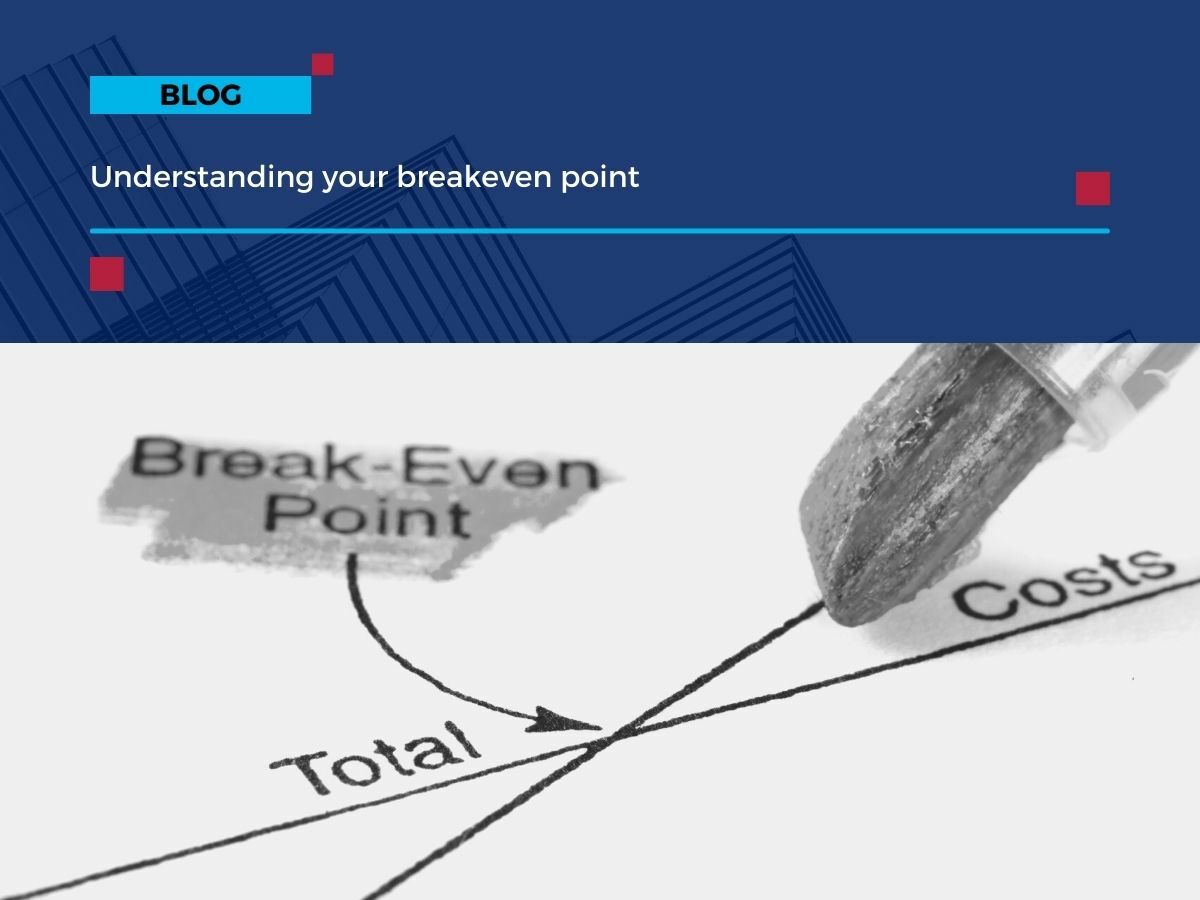
Understanding your breakeven point

Understanding Your Breakeven Point

Understanding your breakeven point

Understanding your business breakeven point is essential to know how much money you need to make to stay in business. It can therefore help you make well-informed financial decisions and practical business plans.

The breakeven point is the income or sales needed to cover all costs. Any earnings above this point generate profit. So your breakeven point tells you the minimum sales required to continue operating a viable business.

Understanding the breakeven point in conjunction with financial reports can give you valuable data to analyse fixed and variable costs and set sales targets for the business or individual staff members.

Fixed and Variable Costs

Fixed costs

Fixed costs remain the same regardless of how many sales you make. Expenses like rent, equipment lease repayments or full-time staff have to be paid whether you sell any goods or services or not. Fixed costs are often called overheads.

Variable expenses

Variable expenses, (sometimes called production costs), fluctuate based on sales. For example, cost of goods sold, production labour, and commissions paid to salespeople will vary according to the number of goods or services sold.

It's helpful to work out an amount or percentage of variable costs compared to the sale price of your products or service. This may not be exact initially, but even if you get a rough figure to work with, this will help calculate your breakeven point. Over time as you analyse your financial reports, you’ll be able to refine the calculation and adjust your selling price accordingly.

How to Calculate Breakeven

You’ll need to know your fixed costs (overheads), selling price and production costs.

One common method of calculating breakeven is overheads / (selling price – production cost)

For example, let’s say overheads per month (rent, vehicle lease, administration staff) are $20,000, and you sell a coaching program for $3,000 with variable costs (coach fees, handout materials for participants, advertising) of $1,500 per program.

Your calculation would be: $20,000 / ($3,000 - $1,500) = 13.33

You would need to sell over 13 programs per month to break even, which equates to $40,000 worth of sales.

If the same program had variable costs of $1,800, you would need to sell 17 programs per month to generate $50,000 worth of monthly sales just to cover costs. Variable costs of $1,000 per program would mean you only need to sell 10 per month to break even.

With these examples, you can see how important it is to understand your fixed and variable costs. Then you'll know exactly how much you need to make to remain in business and the resulting impact on your financial position.

Once you have a reasonably accurate breakeven figure, you can quickly calculate your profit before tax for sales above the breakeven point. In the example where variable costs are $1,500 per program, let’s say you sell 20 programs each month. This would result in an extra $10,000 in profit (before tax) after paying for overheads and variable costs.

Can breakeven help with your pricing?

Understanding your breakeven point can give you some deep insights into your selling prices, helping you understand if they’re realistic.

For example, if your variable costs are high, how much more income will you need to reach breakeven. Is there a fair price for consumers that covers your expenses in a reasonable time frame? Do you need to raise prices to account for fixed and variable costs accurately?

Talk to us about calculating your breakeven point.

There are different ways of calculating your breakeven point to confirm the viability of your business, and the ideal pricing point for driving both sales and profitability.

We'd love to help you understand your business financials in more depth, so you can plan for long-term sustainability, enjoyment and profitability.

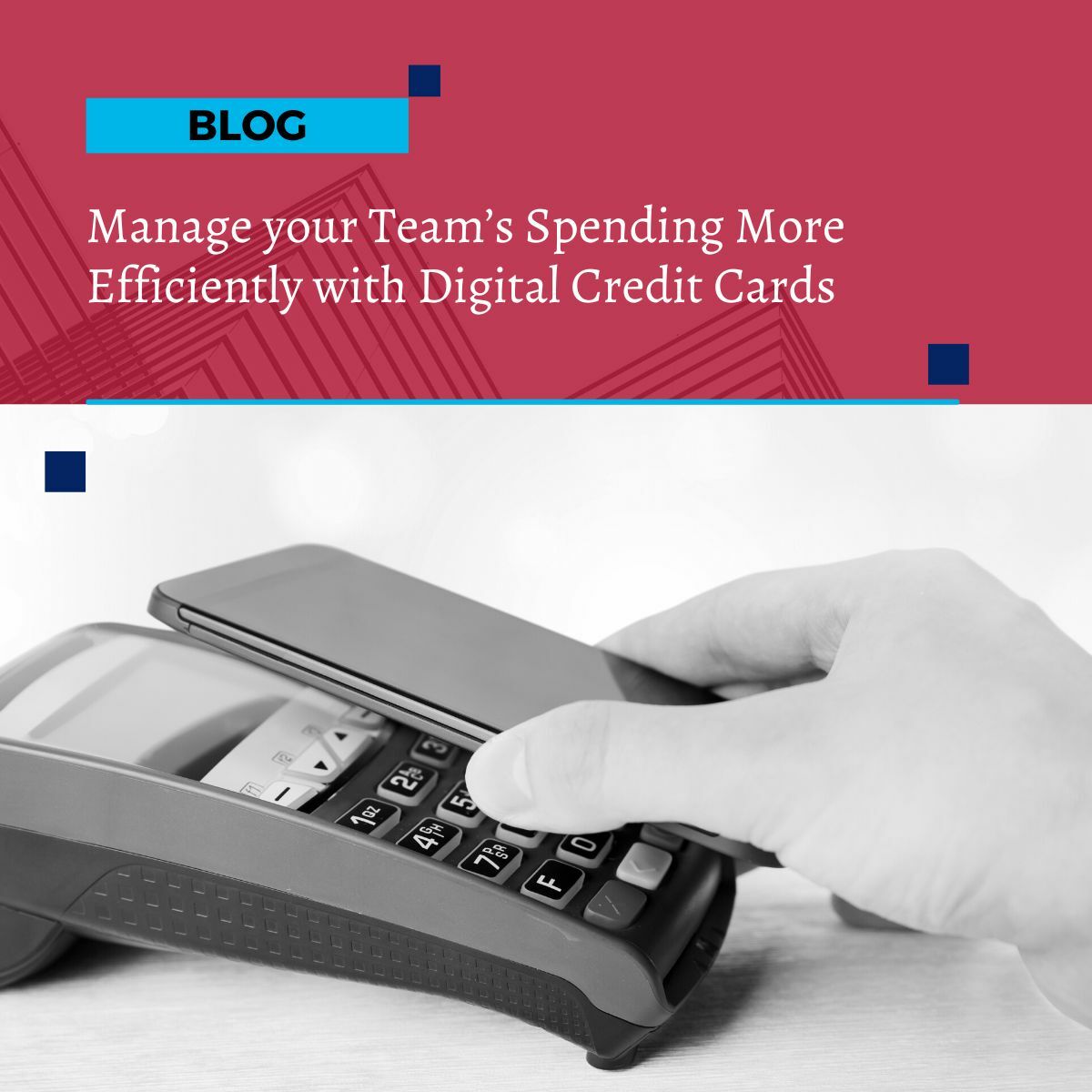
Manage your Teams Spending

Manage your Team’s Spending More Efficiently with Digital Credit Cards

Manage your Team’s Spending More Efficiently with Digital Credit Cards

Do you need to manage expenses for your business and team? Digital credit cards have been around for some years but have recently grown in popularity as their user-friendly practicality is becoming appreciated by many business owners.

How do Digital Credit Cards Work?

The provider issues a digital card number in exactly the same format as a regular credit card. Cards are assigned to individuals who can use the card for all expenses, such as automatic credit payments for subscriptions or buying business purchases in-store using their Android or Apple wallet.

The cards are linked to the business bank account, which means the owner can control the amount of money allocated to a particular card. Within each card, you can set limits according to budgets for different types of spending categories or projects, and you can always see exactly how much of the set budget a team or individual staff member has spent.

Staff can request additional funds if needed, and you can customise limits and authority levels for each user. Managing expenses becomes far more efficient and structured rather than relying on expense reports submitted long after the expense has been incurred.

Digital credit cards are easy to activate and, in some cases, are virtually immediate. You'll get a dashboard by the provider that lets you see real-time information about where your money is being spent and by whom.

Using the card on a smartphone means a photo of the invoice or receipt can be uploaded immediately, making business bookkeeping more effective and accurate as data is captured at the time of the expense.

There are many providers of digital cards, and we encourage you to research the options, but if you need to manage team expenses, getting some form of digital card will be well worth your while.

Apart from the improved control and efficiency digital cards give the business owner, one of the most significant benefits is the minimisation of fraud and unapproved automatic billing.

Talk to us if you'd like to understand more or if we can help integrate the digital cards into your accounting software file.


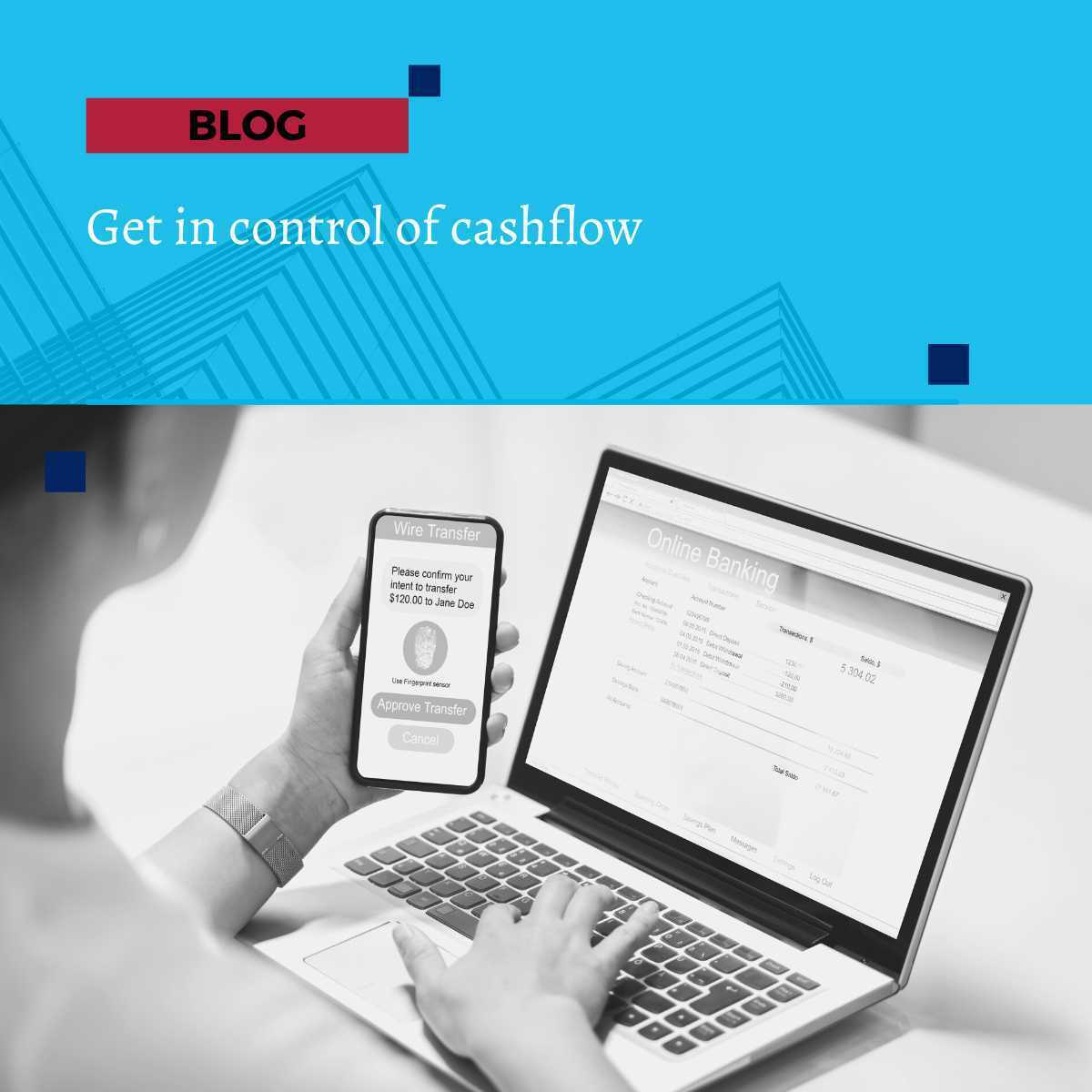
Get in control of cashflow

Get in control of cashflow


Get in control of cashflow

It's an undeniable fact - cashflow is the lifeblood of any business. Without enough liquid funds coming in, it becomes harder to do the basics like trading and paying suppliers. Even worse, a lack of cash can eventually lead to failure for a business. That's why effective cashflow management is so important.

No one likes to think about potential financial disasters, but being proactive with your cashflow can make all the difference when it comes to keeping your business afloat. You need to understand not only where your money is going, but also how you can put yourself in a positive cashflow position so you have enough on hand to cover your expenses.

Fast ways to improve your cashflow

Managing your cash flow is an ongoing process.

Keeping close tabs on the numbers in your regular cash flow statements is key. A negative drawdown could be caused by insufficient sales, unpaid invoices, or not controlling costs effectively.

What's important is to take a complete approach and proactively find ways to improve your company's cash situation.

Some key ways to boost your cash position include:
Make it Easy to Get Paid – Using the Latest in Payment Tech to Speed up Payment Times

Getting paid quickly is essential for maintaining a healthy cash flow. The faster you receive payments from customers, the better off your business will be financially.

To make this happen more effectively, you should use modern payment technologies such as online invoicing software or mobile payment apps that allow customers to pay quickly and securely via their smartphones or computers. This will reduce late payments significantly and give your cash position a boost.

Track and Manage Debts – Chasing Any Late Payments To Reduce Your Aged Debt

Another way of improving your cash position is by tracking any outstanding payments due from customers so that you can start chasing them up promptly if they are late in paying their invoices.

Look into setting up automated reminder systems so that customers are sent reminders when they are overdue on payments. This will help reduce the amount of aged debt in your books which can have an impact on your bottom line.

Manage Spending Effectively – And Start Tracking Reviewing And Reducing Your Costs

There’s no point increasing income if it’s all going out again on unnecessary costs.

It’s important to keep track of where every dollar is going each month so that you can identify any areas where money may be being wasted unnecessarily. Once these areas have been identified, then steps can be taken to reduce these costs so that they don't eat away at any additional profits made by increasing sales or reducing aged debt levels.

Improve Your Sales and Marketing – Creating More Sales and Boosting Income

One of the best ways to increase your cash position is by boosting your sales revenue.

To do this, you need to make sure that your marketing efforts are effective at generating leads and converting them into customers. This means investing in the right marketing strategies such as website design, search engine optimization (SEO), content marketing, social media marketing, email campaigns, etc. You could also consider offering discounts or promotions to encourage customers to purchase from you more regularly.

Talk to us about improving your cashflow.

If cashflow is becoming a headache for your business, we can help you with cashflow forecasting and understanding your cash position to support you attaining that all-important positive cashflow position.

Get in touch to improve your cashflow.

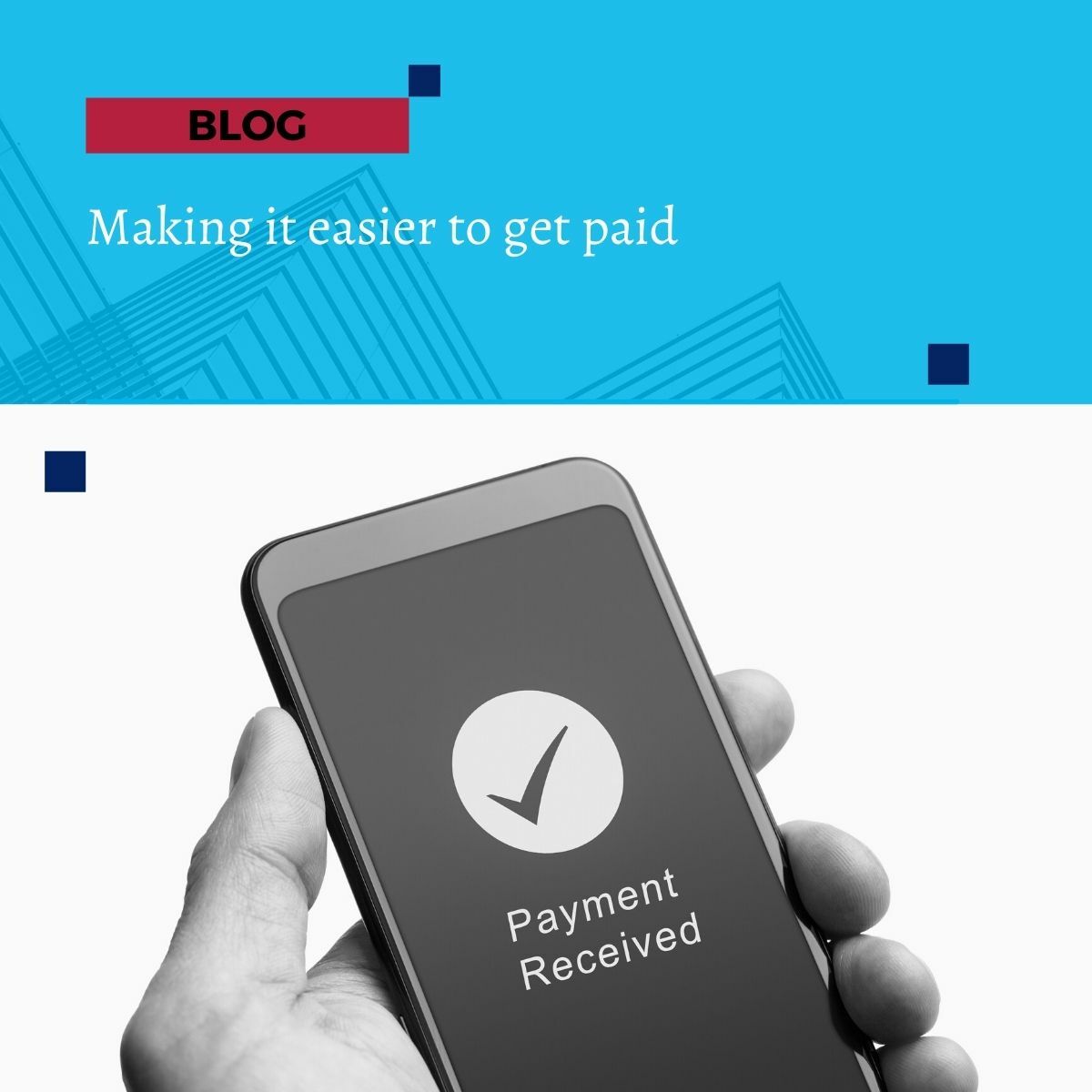
making it easier to get paid blog

Making it easier to get paid

Making it easier to get paid

Making sure you get paid on time is crucial to your success.

The process of making sales and generating revenue lies at the heart of any business model. But you can't manage your cashflow effectively or raise any profits if customers don't actually pay their invoices.

The easier you can make it for customers to pay you, the faster you'll see cash coming into the business. That’s good news for your financial position, your ability to cover your operational costs and your capacity to fund the growth and expansion of your business.

So, how do you speed up those payments and make sure you get paid on time?

Set out clear payment terms

Your payment terms are the starting point for healthy payment times.

These terms set out when you expect to be paid and form a legally binding contract with the customer.

You may expect immediate payment on receipt of the invoice. Or you might set out a specific number of days that the customer has to pay the invoice (generally 30, 60, 90 or 120 days, depending on your industry). This is sometimes called ‘trade credit’ and allows your customers to pay for goods and services at a later, pre-agreed date – helping them to spread the cost.

Your payment terms should also include details of any late payment penalties.

If the customer doesn’t meet your agreed payment times, most businesses will add a 1% to 1.5% monthly late payment fee to the outstanding bill. This acts as a great incentive for the customer to pay the bill, before the penalty fees start mounting up.

Invoice customers as soon as you can

In a business-to-consumer (B2C) environment, your customers will generally pay for their goods and services immediately. But when you’re working in the business-to-business (B2B) world, you’ll need to send your customer an invoice, asking for the money to be paid.

A customer can’t settle their bill until you send them an invoice. So, it’s vital to send out the invoice as quickly as possible, so you can minimise the gap between doing the work and being paid for the work.

In some industries, the project will be broken down into multiple invoices, paid across a period of time. This makes it easier for the customer to pay, and means you (as the supplier) don’t have to complete the project before receiving the money you’re owed.

Ideally, you want your invoices to go out as early as possible. This allows your payment terms to kick in and makes it easier to predict when cash will be coming into the business.

Be organised about your payment admin

Getting paid is a process – and the more organised you make the process, the quicker the payment will be received.

When you send out the invoice, make sure you send it to all the relevant people in the payment chain. This will usually be:

  • Your main contact at the client – the person who you usually deal with
  • The person who will approve the bill – the person who will green-light the payment
  • The finance team – the person (or people) who will actually action the payment.

It’s also a good idea to quote any relevant purchase order (PO) numbers that the customer has raised, and to give a very clear description of the work done, or the goods purchased.

Embrace the available payment technology

Invoices used to be hard-copy printed bills, but in the digital age the vast majority of companies will send out e-invoices.

Electronic invoices are easy to raise (usually from your accounting software or project management app) and can be emailed out instantly.

Doing everything in the digital realm also makes it easier to keep records and keep track of payments.

Many e-invoice systems will also let you add a variety of different payment options for the customer.

You could just include your bank details and wait for the customer to make a direct payment to your account. But you can also include payment buttons in the e-invoice that give customers the option to pay via digital payment gateways, like Stripe or GoCardless.

Offering more ways to pay makes the whole process more convenient for your customers. And it will generally result in faster payment times as a result.

If you want to speed up your payment times and boost your cashflow, please do get in touch. We can help you streamline your payment processes and embrace the latest in payment tech.

chasing invoices

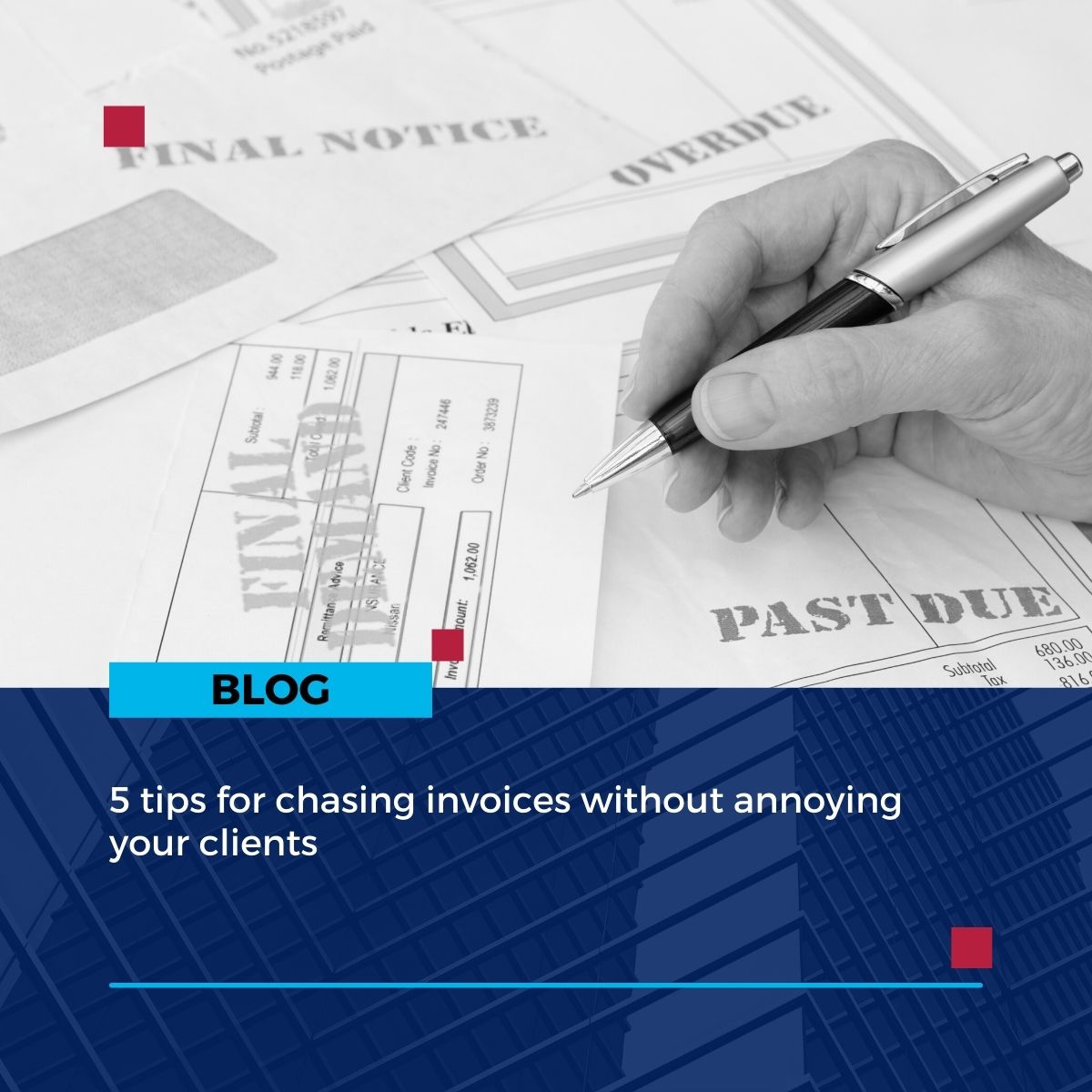
5 tips for chasing invoices without annoying your clients

Chasing Invoices

When you’re a small business owner, sole trader or freelancer, chasing invoices and asking for payment on overdue invoices can be a delicate matter.

Without an accounts person or department, sometimes you’re trying to secure new work and chase invoices from the same person. That can be an awkward tightrope to walk.

Here are five tips for chasing payments while maintaining customer loyalty:

Automate reminders

Set friendly payment reminders that go out automatically – they tell clients they’re missed a payment without making it personal. It’s like your invoicing platform is giving them a nudge, rather than you doing it yourself. You can sign it off with just your business name, rather than your own.

Find out who’s behind the payments

Is there another person at the business who’s in charge of accounts or payments? Ideally, you want to be selling your services to your usual contact and chasing someone else to pay your invoices.

Enlist help from a friend

If you have a friend who also has a small business, become each other’s accounts support. Set your friend up with an ‘accounts@yourwebsite.com’ address and they can send out email reminders and follow-ups to your clients, or call them about the invoice. Maybe you can do the same for them.

Set expectations when you negotiate the job

Firm and clear payment terms make it easier to get paid faster and keep that cash flowing.

Set out your terms up front – it’s much easier to talk about your payment expectations when you organise the job, rather than once the invoice has been sent.

For persistently slow payers, consider offering an early payment discount or ask for more money upfront for the next job.

Be nice, but firm

There’s no need to be rude or aggressive to your clients when chasing payment; you want to maintain a positive relationship.

However, at some point you need to cut off their credit. Often saying ‘I’m very happy to do that for you, just waiting on payment of that last invoice’ will give them the impetus they need to pay you.

But if they persistently don’t pay, no matter how much you like the client, you’re not providing a free service! Stop working for the client and chase those outstanding invoices more assertively.

If you need help managing your outstanding invoices, get in touch for expert support and guidance.


making sure your business finances are in order

Making sure your business finances are in order

Making sure your business finances are in order

Getting your head around the basics of bookkeeping, accounting and good financial practice may not come naturally to all business owners. But the better you understand the numbers, the more control you'll have over your business and your decision-making.

To get you started, here’s a rundown of some of the main financial terms and how they apply to the financial management of your business.

Revenue and money coming into the business

Most of us understand that revenue is the income you generate through your sales.

If you multiply your average sale price by the number of units sold, this is the top level number you get. It’s a gross figure (i.e. before any deductions) and gives you a clear idea of how much money the business is generating through its sales activity.

Revenue can come from various sources, and each income source is known as a ‘revenue stream’.

Revenue streams could include product sales, income from services you provide, income from intellectual property you own (like patents) or income from assets the business owns, like property you rent out at a profit.

Having several revenue streams is a good idea, as it spreads your income generation across multiple areas and reduces the risk of one revenue stream drying up.

Expenditure and money going out of the business

Expenditure refers to any payments you make (either in cash or credit) against the purchase of goods and/or services.

In a nutshell, expenditure is the money that’s going OUT of the business, so it’s important to have a good grip on these costs and to make sure you’re not spending any more money than you need to.

Costs that would fall under expenses include your supplier bills, your payroll expenses, your operational overheads and the costs of any raw materials and goods you buy to keep the business running.

The less you pay out in these expenses and overheads, the more of your revenue will end up as profit – as we’ll see in the next section.

Profit and loss (P&L)

Your profit and loss statement (usually referred to as your P&L) is an incredibly important financial report to get your head around. 

The P&L summarises your revenues and expenditure over the course of a period – usually for the month, quarter or year that’s just ended – and gives you a breakdown of the profits and losses the business made during that period.

If you make more in sales revenues than you spend in outgoing expenses, you make a profit (and that’s vital to your success).

For any business to be financially viable, your financial model MUST be able to generate profit.

Without profits, the business can’t make money, you can’t reinvest back into the company to drive growth, and you (personally) won’t get paid anything.

Cashflow statements and positive cashflow

Your cashflow statement is another vital tool in your accounting toolbox. 

To keep the lights on in the business, you need enough available cash to cover your everyday expenses. Your cashflow statement shows you the cash inflows (money coming into the business from revenues etc.) alongside the cash outflows (payments to suppliers, or operational overheads etc).

For the business to have enough cash in the pot, your cash inflows MUST outweigh your cash outflows. This is called being in a ‘positive cashflow position’ and it’s a level of financial health that every startup should aim for.

By tracking inflows and outflows, and projecting them forwards in time to create forecasts, you can make sure there’s always available cash in the business.

Improving your understanding of the numbers

It takes time to pick up the financial jargon and accounting terms that will help you understand your accounts.

But don’t despair. As your business journey evolves you’ll gradually begin to get your head around the important business finances, numbers, metrics and reports.

Other important finance terms to understand include

  • Turnover = the total sales revenue made in a period. It’s also sometimes called ‘gross revenue’, as it’s the number prior to any deductions being made.
  • Assets = the things you own in the business, like equipment, property or cash etc.
  • Liabilities = the things you owe to other people, like bills, debts and loan repayments.
  • Balance sheet = a snapshot of your assets and liabilities on a given date.
  • Working capital = your current assets minus your liabilities. In common usage, it’s the capital (money) you have in the business to keep the company operational and trading.
  • Funding = bringing additional capital into the business, usually in the form of business finance products like loans, or through private investment from outside sources.
  • Credit score = a rating given to the financial health and risk level of the business. The bigger the score, the lower the risk – and the better your access to funding.

If you’re planning for your business, get in touch. We’ll help you set up the ideal accounting system, so you’re in complete control of your finances.

Keeping your business cash liquid

Keeping your business cash liquid

Keeping your business cash liquid – the difference between cashflow and profit

The foundational goal of any business is to make a profit.

As a business owner, that’s one of your key financial aims – to make enough sales, at a big enough margin, to generate profit from your enterprise.

But how does profit differ from cashflow? And why is cash king?

How do profit and cashflow differ?

To really understand the difference between generating profit and managing cashflow, we need to look at what both these terms mean. You might think that delving into the accounts is a job for your adviser, but being in control of your profit and cashflow is an invaluable business skill.

Let’s take a look at the differences:

What is profit? 

Profit is the surplus that’s left from your income once you’ve paid your expenses, supplier bills and tax etc. It's driven by creating a profit margin and generating value from your products and/or services.

What is cashflow? 

Cashflow is the ongoing process of ensuring that the business has the available cash (or ‘liquid’ cash) needed to operate. This provides the money needed to trade, to pay suppliers, to cover wages or to buy raw materials etc.

Why is positive cashflow so important?

‘Cash is king!’ may be a cliche these days, but it’s a maxim which underpins any successful business model. Yes, it’s great to make a profit at year-end, but if you don’t look after your cashflow then the business may not survive as long as the end of the year.

What’s needed is good cashflow management to enhance your financial health. And without a careful eye on your cash numbers, things can quickly go awry.

A business can generate high revenues and big profits, but still be cashflow poor. In other words, it can have profits at the end of the period, but have very little liquid cash to fund it's day-to-day operations over the course of the period.

Talk to us about improving your cashflow management.

Good cashflow management is all about being in control of your cash inflows (income you’re generating) and your cash outflows (what you’re spending). To achieve ‘positive cashflow’ you need to proactively work to keep your inflows higher than your outflows.

As your bookkeeper and BAS Agent, we’ll help you set up detailed cashflow reporting and forecasting, so you can keep the business in that ideal positive cashflow position. And we’ll also look at key steps for keeping your revenues high, margins profitable and meeting your financial targets.

Get in touch to talk through your cashflow management.

ATO line of credit ending

ATO Line of credit ending


ATO Line of credit ending

As new reporting powers come into play, businesses are being warned against using the ATO as an alternative line of credit.

Debt Reporting Powers

In 2019, the ATO was afforded new debt reporting powers. While this took a backseat to the Covid-19 pandemic, the ATO is now cracking down on outstanding tax debt. 

Businesses without a payment plan, that are more than 90 days in arrears, and who owe more than $100,000 in tax are more likely to be reported to credit agencies by the ATO.

Impact on credit rating

In the past, business owners have sometimes used the ATO like a ‘line of credit’ by not paying their ATO commitments on time.

Taking this road is much more likely to have an adverse impact on your credit ratings and credit insurance limits. This, in turn, makes it more difficult to maintain or extend credit terms with suppliers.

Therefore, it's important to maintain a high level of communication with your creditors. 

Staying on the front foot

As business owners, if you owe tax, it's vital that you stay on the front foot with this ATO crackdown. We suggest you seek the advice of your BAS agent.

First Class Accounts Ovens and Murray, as your BAS Agent, are able to advocate on your behalf to deal with the ATO.

As Busy01 Consulting, we can also to assist with:

  • preparing a business plan
  • management advice
  • cash-flow planning and projection
  • systems development
  • business expansion
  • budget development
  • trading-structure planning.

Get in touch to discuss which options are best for your business.